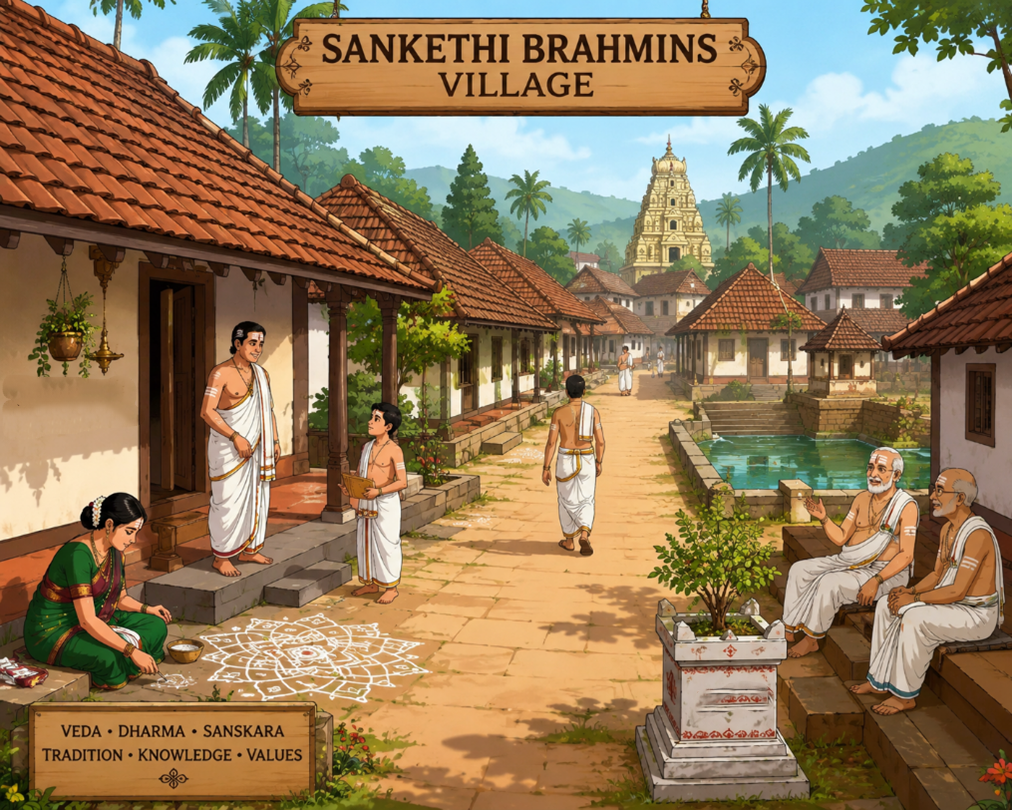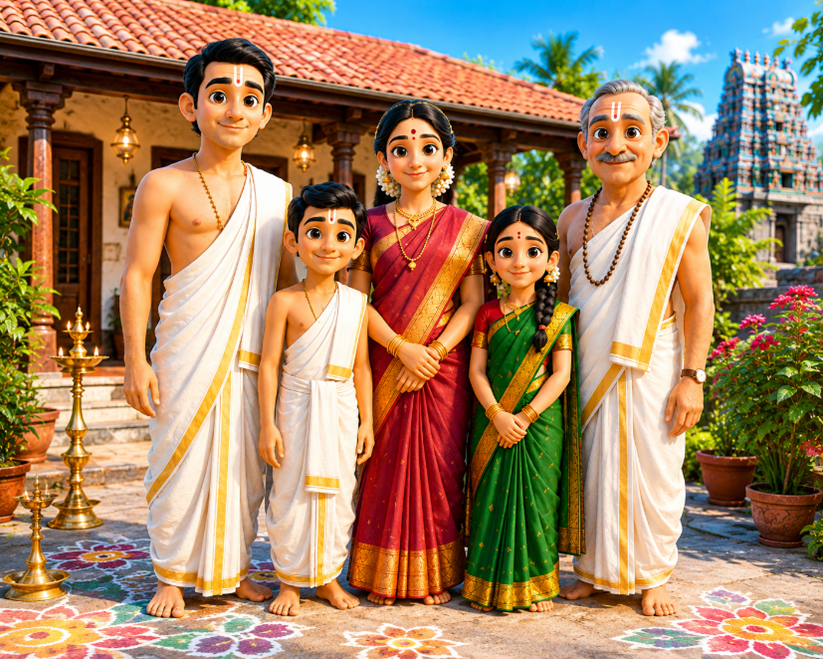
Born from devotion, shaped by migration, and preserved through generations — the story of the Sankethi Brahmins is a living legacy of South India.
In the quiet embrace of South India, where temple bells echoed through coconut groves and rivers carried the chants of ancient sages, a remarkable community took root — the Sankethi Brahmins.
Their story is one of migration, resilience, spirituality, and cultural brilliance.
Around 15th – 16th century, a group of about 700 – 800 families, was led by a woman named Nacharamma, who left her home due to humiliation by other male Brahmins and moved her followers towards Karnataka. They settled primarily on the banks of rivers like the Cauvery and Tunga in Karnataka, with major initial settlements in Bettadapura and Kaushika.
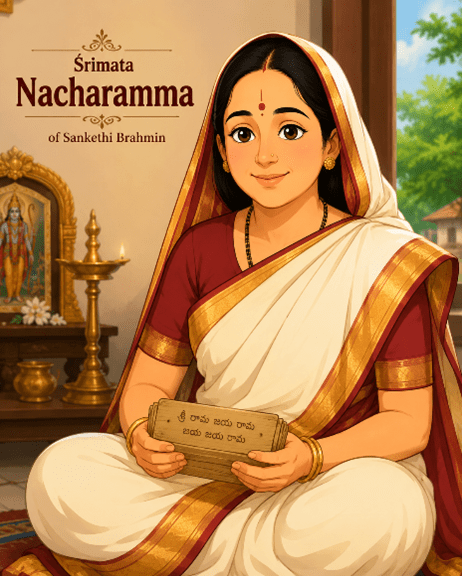
They sought safety, spiritual continuity, and a place to preserve Vedic traditions, they settled in beautiful villages surrounded by forests, rivers, and temples.
Nacharamma, also known respectfully as Śrimata Nacharamma, is regarded as the founding matriarch of the Sankethi Brahmin community — a Smartha Brahmin group. Her story blends history, oral tradition, and spiritual symbolism, and remains an important part of the Sankethi identity. She is said to have belonged to a Brahmin family, and her name “Nacharamma” (or Nacharu/Nacharamma) means Mother Nacharu — the suffix “-amma” marking reverence and motherhood status among Sankethis.
Nacharamma is honoured as both a historical figure and a divine mother who represents courage, learning, and self-determination. Her story continues to be told within the Sankethi homes, temples, and cultural events, ensuring that the “Mother of the Sankethis” remains a living memory.
The migration led to the founding of two main Sankethi subgroups:
- Kaushika Sankethis (centered in Kowshika, Hassan)
- Bettadapura Sankethis (in Mysore district)
Over generations, these families created a unique identity that harmoniously blended Tamil heritage with Kannada culture. From this beautiful confluence emerged the Sankethi Brahmins — a community known for scholarship, devotion, discipline, humility, and refined living.
What made the Sankethis truly special was their ability to preserve ancient traditions while adapting gracefully to changing times. They developed their own distinct language, Sankethi, a fascinating blend of Sanskrit, Tamil, and Kannada influences. Spoken lovingly within homes and communities, the language became a living symbol of their heritage.
Life in traditional Sankethi households revolved around spirituality and simplicity.
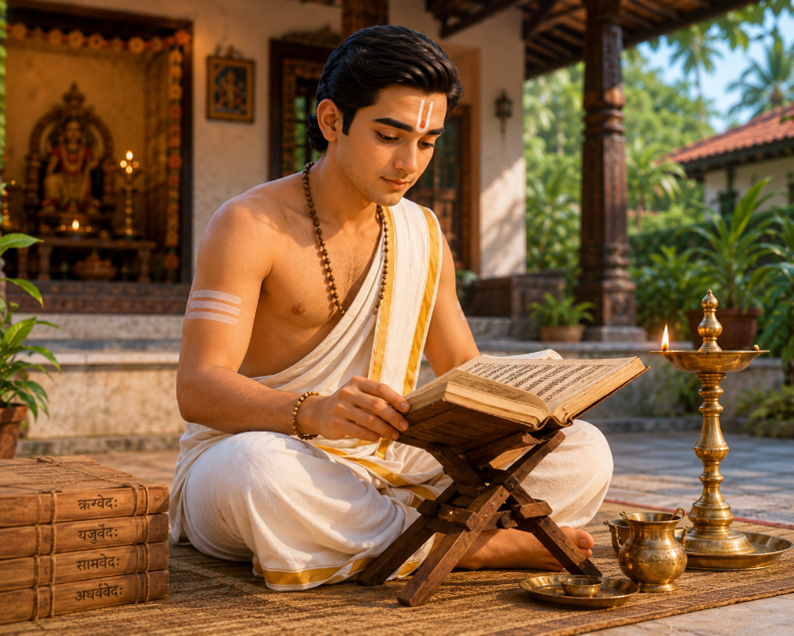
The day often began before sunrise. Oil lamps were lit. Sacred mantras filled the air. Elders recited Vedas while children learned discipline, respect, and devotion from an early age. Temples became the centre of social and spiritual life, where festivals, rituals, music, and community gatherings strengthened family bonds.
Education held immense importance in Sankethi culture. Knowledge was considered sacred. Many Sankethi Brahmins became respected scholars, teachers, priests, philosophers, musicians, and Ayurvedic practitioners. Their homes were not merely residences — they were centres of learning, culture, and spiritual refinement.
Music flowed deeply through the community’s soul. Carnatic music, devotional singing, and classical arts became cherished traditions passed across generations. During festivals and religious ceremonies, the sounds of veena, flute, mridangam, and sacred chants created an atmosphere of divine serenity.
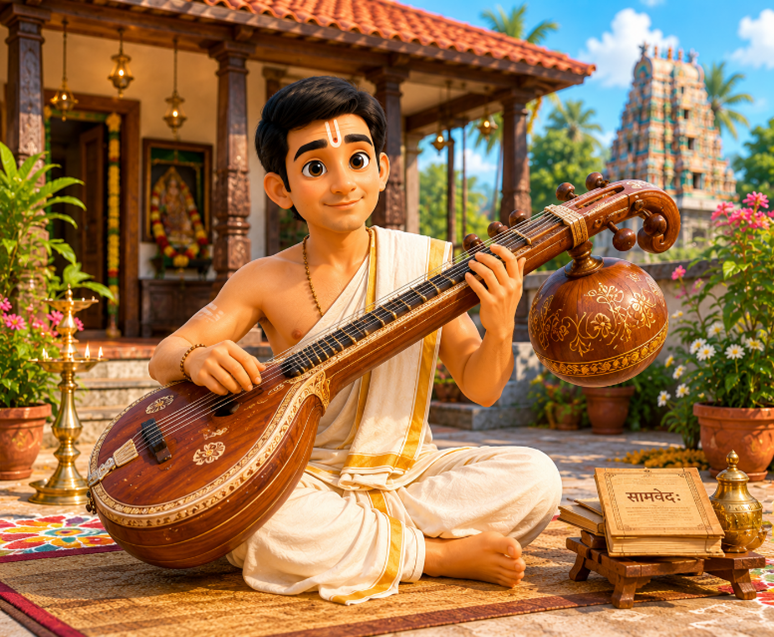
Food too reflected their philosophy of purity and balance. Traditional Sankethi cuisine emphasized sattvic living — simple, nourishing meals prepared with gratitude and offered first to the Divine before being shared with the family.
Yet beyond rituals and traditions, the true strength of the Sankethi Brahmins lay in their values:
- Respect for elders
- Harmony with nature
- Devotion to knowledge
- Simplicity in lifestyle
- Compassion in relationships
- Faith in spiritual living
Even as modern life transformed society, Sankethi families carried their traditions across cities and countries. Today, whether in India or abroad, they continue to preserve their customs, celebrate festivals, teach their language, and pass on timeless wisdom to younger generations.
The Sankethi Brahmin story is not merely about a community.
It is the story of people who protected sacred knowledge through centuries…
Who preserved culture without losing humility…
Who believed that true wealth lies not in possessions, but in wisdom, devotion, and inner peace.
And even today, in every Sankethi home where a lamp is lit at dawn, where prayers are sung softly, where traditions are honoured with love — that ancient story continues to live on.