Chettiars

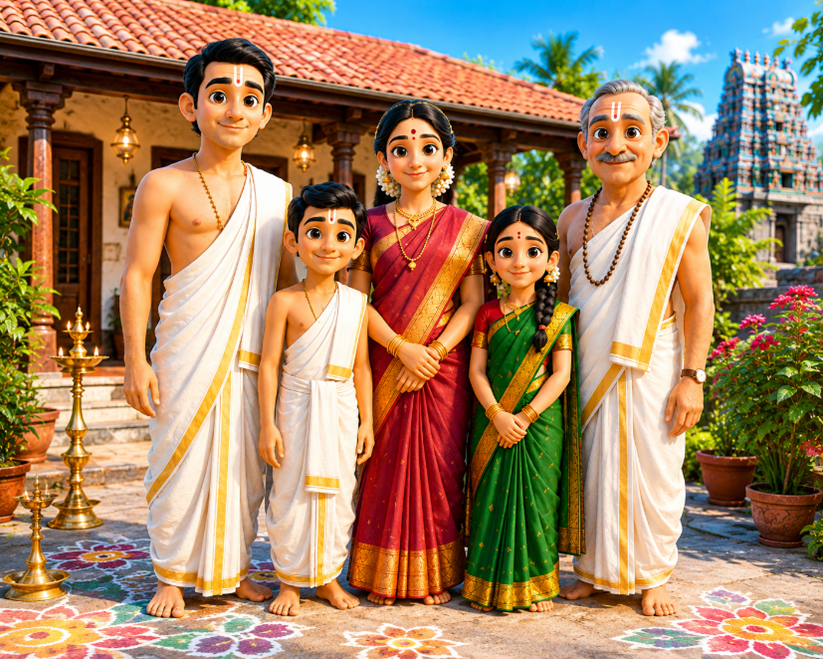
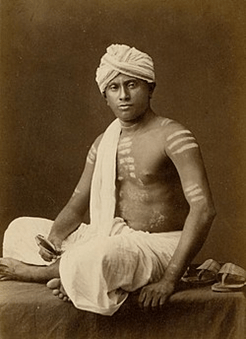
The Chettiars are a prominent, historically wealthy Tamil mercantile community, celebrated as pioneering international bankers and traders across Southeast Asia, renowned for their philanthropy, distinct architectural heritage and spicy, aromatic cuisine. The term “Chettiar” is derived from the Sanskrit word “Shrestha” meaning wealthy.

The story of Chettiars begins in the eastern coast of India in Kaveri Poompattinam, the bustling port city of Chola Kingdom. Historically, they were involved in the trade of salt, textiles, gems, and precious stones and developed as bankers during the Chola era.

The Chola dynasty was a dominant Tamil power (9th–13th centuries CE) based in the Kaveri valley, known for building a vast maritime empire, and exercising naval supremacy across Southeast Asia. Under leaders like Rajaraja I and Rajendra I, they created a powerful and organized state.

Cholas used their navy to control trade routes in the Indian Ocean. Known for constructing the Brihadisvara Temple (Thanjavur) and creating exquisite bronze sculptures of Nataraja, they developed a highly organized administrative system with self-governing local village assemblies (Ur and Sabha).

They expanded from the Kaveri delta to control all of South India, Sri Lanka, and parts of Southeast Asia.

Chettiars were the primary financiers and merchant guilds for the Chola Empire, managing international trade connections across Southeast Asia. Trade and commerce flourished under the Chola emperors, with kings often accommodating these guilds because of the benefits derived from them.

Prominent guilds like the Nanadeshis, Manigramam, and Ayyavolu were active during the Chola period.

The Chettiars were key to the maritime prosperity of the Chola Empire, often building massive, affluent houses in their homeland while acting as powerful financial architects of the empire’s overseas commercial dominance.

In the fifth century they abandoned Kaveri Poompattinam, because of a tsunami and moved inwards. Haunted by that collective memory of water’s rage, the community chose to settle in an arid, infertile region – a decision that shaped their future. Like the Marwadis of Rajasthan, another community born of dry land, the Chettiars turned outward, venturing across seas in search of fortune, only to return and invest in their homeland.

Over the centuries, their voyages took them to Malaysia, Singapore, Burma, Vietnam, and even parts of Europe, often alongside the Cholas and later under the British. They became trusted financiers and intermediaries for empires, building wealth and influence through networks that spanned continents.

Known for their prowess in money lending, they established themselves as bankers and financiers, not only within South India but also spreading to Southeast Asia (Burma, Malaysia, Singapore, Vietnam and Sri Lanka) during the colonial era. They are described as a prosperous, community-oriented group that was disciplined in financial practices, with strong ties to temples as central community institutions.

But the Second World War disrupted those global connections, forcing many to return home. They continued to thrive into the 19th and 20th centuries before shifting focus during the economic downturns

Today, the Chettiars are spread across 90 villages, numbering over a lakh people. While outsiders often associate them with the grandeur of their mansions and the fiery flavours of Chettinad cuisine, their legacy goes much further. They were patrons of music and dance, nurtured Tamil literature, invested in education, and even helped shape the early Tamil film industry. Theirs is a community whose influence reached far beyond the dining table, leaving behind a cultural imprint as rich as their cuisine.

Chettiars and Burma

The Chettiars provided the essential capital that transformed the Irrawaddy Delta from jungle into productive paddy fields. By 1930, they had established 1,650 offices across Burma. They were the primary source of agricultural credit, with an estimated 750 million rupees invested in the country by 1930. Their loans often accounted for nearly 80% of all agricultural lending in Lower Burma. They functioned as “proto-financial institutions,” using internal trust and sophisticated accounting (like the Hundi system) to provide lower interest rates than indigenous lenders.

When rice prices collapsed during the 1930s Depression, many Burmese cultivators defaulted on their loans. Under the British legal system, Chettiars were forced to foreclose on mortgages. By the late 1930s, they had unwillingly become the owners of about one-quarter to one-third of Burma’s best cultivable land. This massive transfer of land to “foreign” moneylenders fuelled intense anti-Indian sentiment and led to the Chettiars being demonised as scapegoats for the failures of the colonial economy.

The Japanese invasion in 1942 and the use of worthless “banana money” to repay debts severely depleted Chettiar capital. Following Burma’s independence in 1948, the Land Nationalization Act effectively stripped the community of their remaining holdings without adequate compensation. The wealth remitted from Burma built the famous Chettinad mansions in Tamil Nadu, which often feature Burma teak and other imported materials.

Chettiars and Malaysia

The Chettiars were pivotal in shaping Malaysia’s colonial economic infrastructure from the 19th century onwards by providing crucial financial services, banking, and credit to Malay farmers, Chinese merchants, and rubber planters when formal British banking was inaccessible. Their lending, spanning rubber plantations to tin mining, essentially acted as the “bankers before there were banks” in Malaya.

Chettiars were a dominant, trusted source of capital and credit for smallholders, miners, and merchants, especially in rubber and tin, facilitating the growth of small businesses and land ownership.

Under British rule, they were encouraged, with their operations often serving as intermediaries, linking colonial commercial banks to local traders and ensuring the financial stability of economic ventures. They operated through a structured, often male-only, agency system (Kittangi), prioritizing close-knit networks to facilitate business and money-lending.

While focusing on business, they also made significant cultural contributions, particularly to Hindu life in Malaysia, including building temples and contributing to religious activities.

Over time, particularly after Malaysian independence, their role as main moneylenders declined. They shifted towards other professional sectors while remaining a respected part of the Indian community’s legacy in the region.

There is also a smaller, distinct community known as the Melaka Chettiars (or Malaysian Chettis), who are distinct from the Nattukottai Chettiars. They are descendants of early South Indian traders who intermarried with local populations, forming a unique syncretic culture.

Chettiars and Vietnam

The Chettiars established a strong financial presence in Vietnam (French Cochin-China) starting in the 1870s. Operating from Saigon’s “Tamil Quarter” (Ohier Street), they acted as bankers, financiers, and property owners, facilitating rice and rubber trade before returning to India after 1963.

They operated as moneylenders and brokers, often providing credit to rice farmers and rubber planters. They concentrated in Saigon (Ho Chi Minh City), with businesses extending to villages along the Mekong delta.

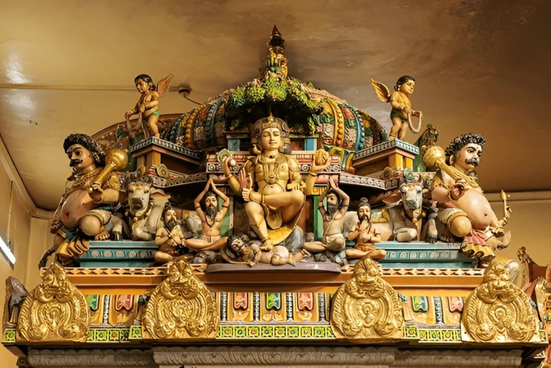
The Chettiars built Hindu temples of Lord Murugan for their community. The famous Sri Mariamman Temple in Ho Chi Minh City stands as a major remnant of this, along with others.

They maintained a close-knit network, often bringing women to settle in later years (1930s onwards).

Chettiars and Singapore

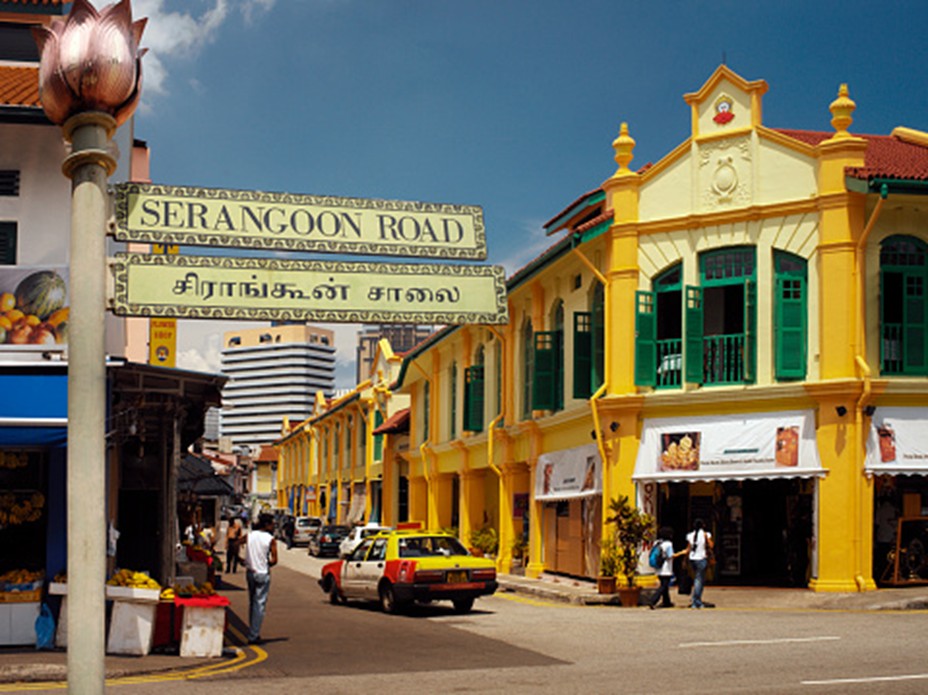
The first wave of Chettiar immigrants are believed to have arrived in Singapore in the 1820s. They established their businesses in the Singapore River area (notably along Chulia Street and Market Street) in close proximity to the trading houses and government offices. Their clients included small businesses, labourers, hawkers and plantation owners.

Borrowers who loaned small amounts from the Chettiars had to sign a promissory note. Those who took loans for larger amounts had to provide some form of collateral, such as jewellery or a title deed. Interest was charged on the amount borrowed and the rate of interest was listed in the promissory note.

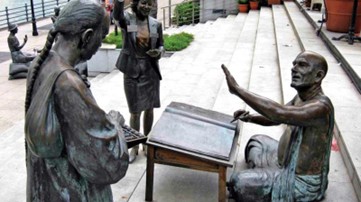
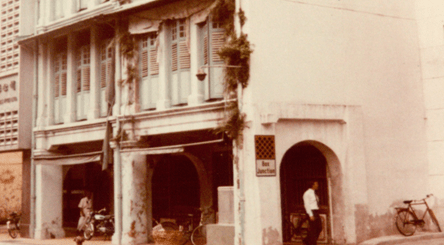
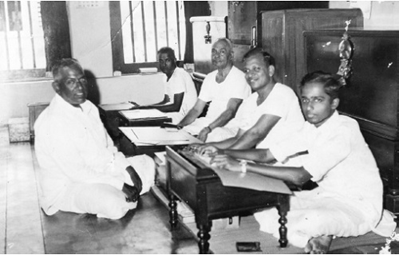
The Chettiars generally conducted their businesses in Kittangis (which means “warehouse” in Tamil), which were usually shop houses. The Chettiars would set up their offices on the ground floor of a Kittangi.

As Chettiars usually operated individually, each had his own safe and wooden cupboards for conducting business. A Chettiar moneylender usually sat on the floor and worked from a small wooden desk. There were also no partitions to separate the various Chettiar moneylenders as they had their own designated spots for doing business.

While some of the Chettiars ran their own moneylending businesses, others were agents who worked as employees for the owners of moneylending firms. They were paid a salary and bonuses, depending on the profits made by the business. Each agent represented his employer and was only contracted for a specific period of time. Before an agent’s contract was up, the employer would send a newly appointed agent to understudy him. Once his contract had ended, an agent would seek employment with other firms.

A Chettiar’s financial training would usually start in his childhood, where he would learn the theory of banking and accounting from family members. Boys as young as nine years old were rigorously trained in mental arithmetic and even taught to do mental calculations in fractions. They would go on to serve their apprenticeship at various Chettiar firms once they reached their teens.

The Chettiars worked and lived in the Kittangi. While the ground floor of the Kittangi served as their offices, the upper floors were used as residences. A caretaker took care of the Kittangi while cooks provided the meals.

Most of the Chettiars who came to Singapore did not bring their whole family with them. While some came alone, others brought their sons along with them. The boys were to become apprentices of the business. It was only in the 1950s that Chettiar women began arriving in Singapore in large numbers.

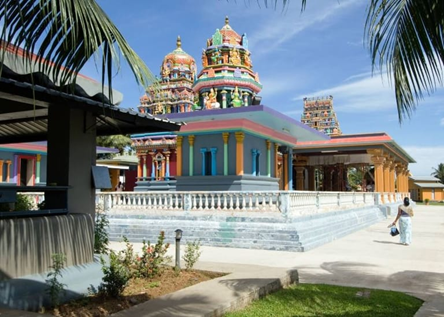
The Chettiar community in Singapore established the Sri Thendayuthapani Temple (also known as Chettiars’ Temple) at Tank Road in 1859 to provide a place of worship for the Hindu deity, Lord Muruga.

The Chettiar moneylenders were considered a major player in the banking and finance sectors of early Singapore. In the 19th and early 20th centuries, there were more Chettiar moneylending firms than there were banks. They financed trade, tin mining, and rubber plantations, providing crucial capital for Singapore’s early growth. They provided loans to traders and industries, especially when British banks were hesitant to invest, functioning as private bankers and moneylenders. They introduced a sophisticated indigenous banking system, including specialized promissory notes known as Hundi.

The moneylending business started to decline in the 1930s as a result of the Great Depression, stricter legislative control over moneylending activities and the participation of other groups, such as the Sikhs, in moneylending. The Japanese Occupation (1942–1945) also brought about a steep fall in Chettiar moneylending activities due to the instability of the Japanese currency and rampant inflation.

After the war, the decline of the Chettiar moneylending business continued. This was due to a combination of various factors, including stricter government policies concerning moneylending, immigration and employment practices. The growth of the industrial and banking sectors also contributed to the decline of moneylending. In particular, stricter policies in post-war Singapore towards moneylending activities were believed to have dealt a severe blow to the industry. In the 1950s, for instance, a new ordinance was enacted that required every moneylender to be registered and licensed. They were also to be subjected to official supervision. Revisions to the Moneylenders’ Act in the 1970s enforced more stringent rules on the moneylending business. These regulations probably forced many Chettiar moneylending firms out of business.

By 1981, there were only seven registered Chettiar moneylending firms still operating in Singapore. Many of the surviving Chettiar moneylenders conducted their business activities at 238, Serangoon Road or near the Chettiars’ Temple at Tank Road.

Sri Lankan Chetties

Chettiars settled mostly in Western Sri Lanka, especially in the ports of Colombo from the 16th century to mid-17th century, during the rule of the Portuguese and Dutch.

The Chetties of Western Sri Lanka converted to various forms of Christianity during the colonial era: Roman Catholicism under Portuguese rule, as well as to Anglicanism and Reformed Christianity under British rule and Dutch rule, respectively.

Marriages between Sinhalese and Chetties were very common and therefore many were Sinhalised. The Chetties of Northern Sri Lanka especially in Jaffna were mainly absorbed by the Vellalar caste, although, some still remain separate. A high number of Chetties still live in Nallur, which is known for the inhabitation of high castes, whereas even a road is commemorated for them. Representatives of the Colombo Chetty Association stressed out their distinctiveness, appealing for forming a separate ethnic group.

The Chetties were notably also listed as a separate ethnic group from 1814 to 1817.

Historically an elite and generally wealthy ethnicity, they no longer strictly marry amongst themselves. In addition, migration to Australia, England, United States of America and Canada has tended to dilute their numbers.

The Nattukottai Chettiars were dominant financiers and bankers in Sri Lanka (Ceylon) from the 19th to early 20th century. They played a pivotal role in funding the plantation economy and acting as intermediaries between British banks and local traders. They also played a crucial role in aiding the Sri Lankan economy during the 1930s economic recession.

They were considered essential bankers in the island, especially before British banking expanded, providing capital for plantations and importing/exporting. They operated in Colombo and held significant sway over the financial sector until the early 20th century.

Chettiars used Kittangis that acted as banks, homes, and administrative centres.

The Nattukottai Chettiars are distinct from the “Colombo Chetties,” who are a separate ethnic group in Sri Lanka that migrated earlier, though both have roots in Tamil merchant communities.

They established themselves securely in Ceylon (Sri Lanka) to conduct business, similar to their, expansion into Southeast Asia.

The Chettiars played a transformative role in Sri Lanka’s financial history before their role began to diminish with the rise of modern commercial banking institutions.

Chettiars Religious Paintings

Chettiar religious paintings and artistic traditions are deeply rooted in the cultural identity of the Nattukottai Chettiars. Their art is characterized by opulent, devotional, and highly detailed religious themes, frequently showcasing a blending of traditional Tamil styles with imported materials and influences.

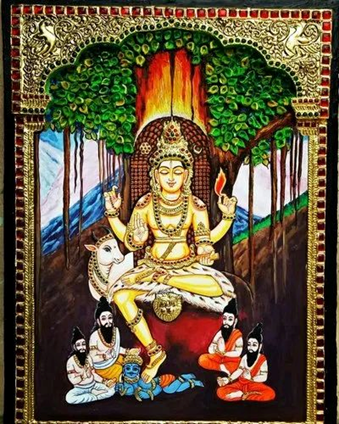
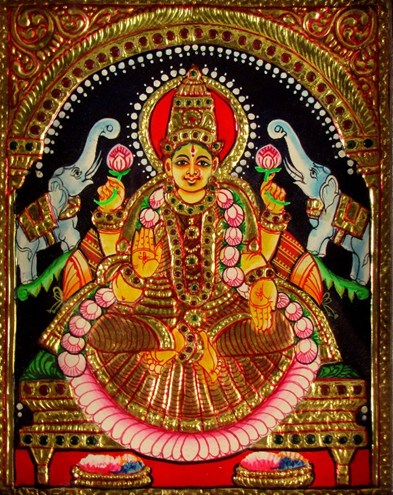
Following the decline of the Maratha rule in Thanjavur, the Chettiar community continued to patronize Thanjavur (Tanjore) artists. They commissioned luxurious paintings featuring 22-carat gold foil, precious stones, and embossed detailing.

As staunch Shaivites, Chettiars favoured religious paintings of Lord Shiva (including his various forms like Nataraja) and Lord Murugan. They also commissioned extensive series of paintings illustrating the lives of the 63 Nayanmars (Saivaite saints) and the 64 miracles of Shiva (Thiruvilaiyadal Puranam), found in places like the Koviloor monastery.

Because the Chettiars were a merchant class, depictions of Lakshmi, the goddess of wealth and prosperity, are very common, particularly in the form of Gajalakshmi. These are frequently featured on the ornate teakwood doors of their mansions.

Chettiar homes and temples often feature murals or painted panels. These buildings integrated Indian art with foreign materials imported by the Chettiars from their travels (e.g., Belgian lamps, Italian marble).

In addition to paintings, Chettiar mansions often featured stained glass panels, particularly in the temples (such as the Sri Thendayuthapani Temple in Singapore), which depicted Hindu deities like Shiva and Ganesha.

A unique, heavy teakwood frame used for Tanjore paintings is known as the “Chettinad frame,” a signature, ornate element in their home decor.

These paintings served not only as religious devotion but also as a demonstration of their prosperity, artistic taste, and commitment to maintaining the “spirit of Bhakti” (devotion).

Chettinad Cuisine

The Nattukottai Chettiars or Chettiars traded across the country and the world. Their travels not only influenced their ways of life but also their cuisine in more ways than one.

Chettinad cuisine is a fiery, aromatic, and complex culinary tradition from the Chettiar community of Tamil Nadu. It is defined by freshly ground, spice-heavy masalas, sun-dried meats and vegetables, and generous use of coconut, peppercorns, and tamarind. Signature dishes include Chettinad Chicken Pepper Masala, Kuzhi Paniyaram, and aromatic rice dishes.

The use local Goondu Milagai (round chillies) for mild heat, black pepper, fennel, fenugreek, cumin, and star anise.

Due to their mercantile travel history, Chettiars perfected the art of sun-drying meats and vegetables, which are later cooked in heavy spices and tangy tamarind sauces.

Dishes are known for being bold, spicy, and tangy, yet balanced, often served on banana leaves for added aroma.

Chettinad food reflects a sophisticated blend of local Tamil traditions with international influences, particularly from their time in Burma (now Myanmar) and Southeast Asia.

Chettiar Architecture

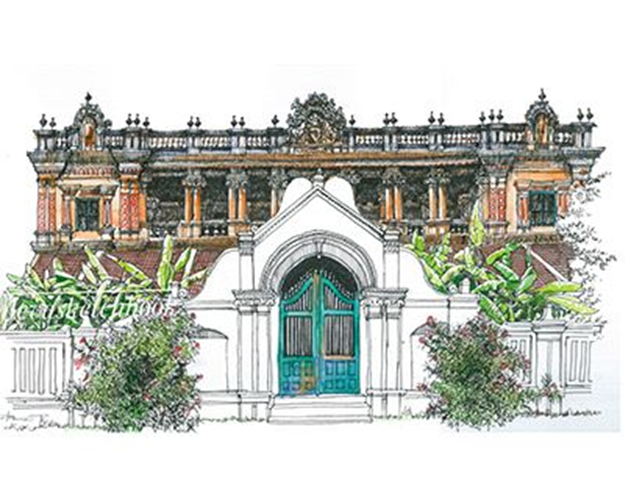
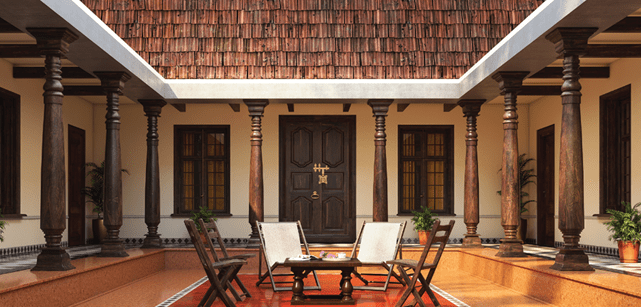
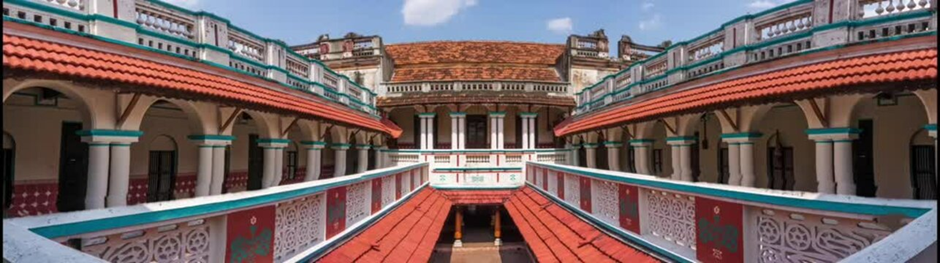
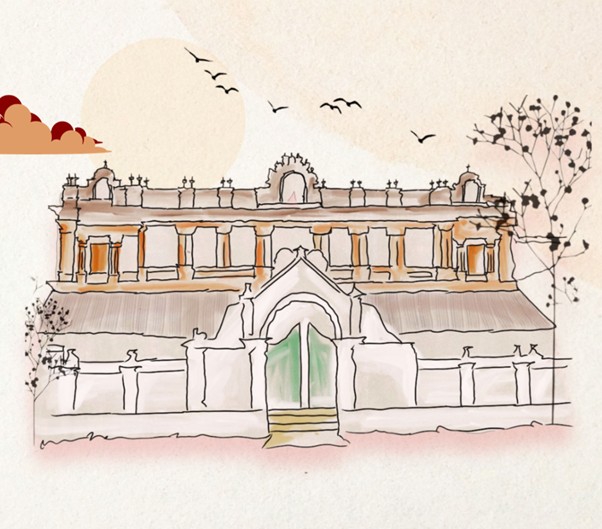
Chettiar architecture, found in Tamil Nadu’s Chettinad region, refers to opulent mansions built by the Nattukottai Chettiar community between 1850 and 1940. These homes blend traditional Tamil layouts—centered on courtyards and raised verandas—with lavish, imported materials like Italian marble, Burmese teak, and Belgian glass, creating a unique, luxurious, and eco-friendly design.

Built along a longitudinal axis, these houses often span from one street to another, featuring a large, ornate entrance, followed by an open-air courtyard (Mutram) surrounded by verandas with pillared corridors, and leading to smaller courtyards and private family chambers, often featuring teakwood interiors.

Known for extreme durability and splendour, they utilize thick brick walls, lime plaster mixed with egg white and polished to a mirror finish, intricate teak wood carvings, Athangudi tiles (handcrafted in the region), and large, ornate iron pillars.

The architecture is perfectly suited to the hot, arid climate. The thick walls and centrally located courtyards ensure the interiors remain cool. The roofs are designed to capture rainwater for wells and common ponds.

The mansions reflect the trading community’s journeys, blending European architectural styles—like Gothic facades, Victorian chandeliers, and stained glass windows—with local Hindu cultural motifs, such as stucco figures of deities on the facade.

These sprawling, two-storey homes served as both family residences and commercial spaces, showcasing the community’s immense wealth and international trade connections.

Many of these mansions can be found in Karaikudi and surrounding areas, with many now being converted into heritage hotels.

Adi Shankaracharya

Adi Shankara was an intellectual giant, a genius of linguistics, and above all, a spiritual light and the pride of India. The level of wisdom and knowledge he showed at a very early age made him a shining light for humanity: Sadguru

Long time back, I read about an incidence. In an ongoing party in Germany, some Germans, followers of Adi Shankaracharya, were discussing about him. They had some unanswered questions. One of them said that Ambassador of India is also present in the party and he may throw some light on the subject. When these people approached and asked him, whether they could ask him some questions on Adi Sankracharya, they were shocked with the reply they got. The Ambassador said “Who is this bloke? I have not heard about him!”. Decades have passed, this incidence still remains fresh in my mind.

As was the Indian Ambassador, I am sure, majority of Indians remain ignorant of such a mammoth and divine personality, which I believe is a big tragedy.

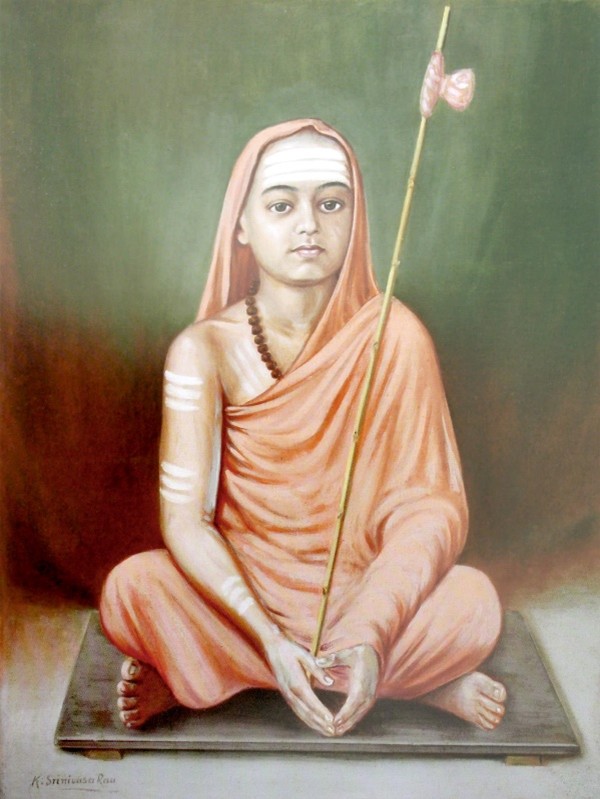
Who was Adi Shankaracharya? He was a prodigal child and an extraordinary scholar with almost super human capabilities. At the age of two, he could fluently speak and write Sanskrit. At the age of four, he could recite all the Vedas, and at the age of eight, he took sanyas and left his home. Even at such a young age, he gathered disciples and walked throughout the country to re-establish the spiritual sciences. By the age of thirty-two, he left his body, but in those twenty four years, from the age of eight to thirty-two, he crisscrossed India a few times, north to south, east to west, from Kerala right up to Badrinath and back, travelling everywhere in all directions. In between he produced thousands of pages of literature.

He was born in Vaisakha Shukla Panchami, 509 BC in Kaladi, a small village in now Kerala, to Sivaguru and Aryamba. His parents, ardent devotees, prayed for a child to Shiva. It is said that in their dream, Shiva told them that he is going to take birth as their child and that is why they kept the child’s name Shankara.

Shankara lost his father at the age of seven. He wanted to become a Sannyasi. When Shankara broached the topic of his embracing the Sannyasa way of life, his mother was reluctant to give him her permission and blessings. One day, however, when he accompanied his mother for a bath in the river, a crocodile caught hold of his leg and started dragging him. His mother could only stand and watch helplessly. Then Shankara called out to his mother, asking her to permit him to become a Sannyasi at least during these last moments of his life. She agreed and miraculously the crocodile let go of Shankara’s leg. To console his mother he promised her that he would come back to her at the time of her death and perform the last rites.

Before he was eight, as a young Brahmachari, the young Shankara went to a house to beg for his daily food. The hostess was a kind but very poor lady. All she could give him was a small amalaki (goose-berry fruit). Shankara was deeply touched by the sincerity of this poor lady and he invoked Goddess Lakshmi (The Goddess of Wealth) by singing spontaneously the Kanakadhara Stotra. The legend has it that the Goddess showered golden amalaki fruits into the house.

He left home when he was eight. He embarked on a quest to find a Guru. Young Shankara journeyed at least 2000km before finally meeting his Guru, Govind Bhagavatpada. He stayed there serving his Guru for four years. Under Govind Bhagavatpada’s mentorship, Shankara delved into ‘Gaudapadiya Karika’, ‘Brahmasutra’, ‘Vedas’ and ‘Upanishads’. Shankara swiftly mastered nearly all the ancient texts, to his teacher’s astonishment.

At the age of twelve, his Guru deemed that Shankara was ready to write commentaries on major scriptural texts. At his Guru’s command, Shankara wrote commentaries elucidating the subtle meanings hidden in the teachings of the scriptures. At the age of sixteen, he dropped his pen having completed writing all the major treatises.

From the age of sixteen to thirty-two, Shankaracharya went forth, travelling across the length and breadth of ancient India bringing to the hearts of the masses the life-giving message of the Vedas: “Brahman, Pure Consciousness, is the Absolute Reality. The world is unreal. This is the correct understanding of the Sastra and is the thundering declaration of Vedanta”.

In those days, ancient India was sunk in a quagmire of superstitions and scriptural misinterpretations. Degraded ritualism flourished. The essence of Sanatana Dharma, with its all-embracing message of Love, Compassion and the Universality of Humankind was completely lost in the blind performance of these rituals.

Shankaracharya challenged various eminent scholars and leaders of various religious sects in vigorous debates (Shastrarth). They championed their own interpretations of the scriptures but the prodigious boy sage was easily able to overcome all of them and make them understand the wisdom of his teachings. These men of stature then accepted Shankaracharya as their guru.

They started to practice in accordance with his guidance, and this change in their lives also wrought a change in the lives of their innumerable followers, who came from all strata of society.

He established four Ashrams in four corners of India and entrusted his four disciples to teach and propagate Advaita through them.

In Shankara’s time, there were innumerable sects following their own narrow philosophies and systems of worship. People were totally blind to the underlying common basis of The One God. For their benefit, Shankaracharya formulated the six sect system of worship which brought to the fore the main godheads – Vishnu, Siva, Shakti, Muruka, Ganesha and Surya. He also formulated the rituals and rites to be followed in most of the major temples in India.

Apart from his immense intellectual and organisational capabilities, Shankaracharya was an exquisite poet, with a heart brimming with Love of the Divine.

He composed 72 devotional and meditative hymns like Soundarya Lahari, Sivananda Lahari, Nirvana Shalkam and Maneesha Panchakam. He also wrote 18 commentaries on the major scriptural texts including the Brahma Sutras, the Bhagavad Gita and 12 major Upanishads. He also authored 23 books on the fundamentals of the Advaita Vedanta philosophy which expound the principles of the non-dual Brahman. These include Viveka Chudamani, Atma Bodha, Vaakya Vritti, Upadesa Sahasri, among others.

Considered to be an incarnation of Lord Siva, Shri Shankara lived only a short life span of 32 years. There are inumerable inspiring legends about him.

Rani Naiki Devi the Warrior Queen

Chalukyan Kingdom, established by Vanraj of the Chapotkata dynasty in the 8th century, had Anhilwara Patan as its capital. According to American historian Tertius Chandler, the ancient citadel was the tenth-largest city in the world in the year 1000, with a population of approximately 100,000.

Raja Ajaypal, the descendent of Vanraj married Naiki Devi, daughter of Mahamandaleshwar Parmadi, Kadamba king of Goa. Raja Ajay Pal’s reign was short-lived since he died only four years after ascending to the throne. Mulraj II, the son of Naiki Devi and King Ajay Pal, was installed on the throne, but Rani Naiki Devi remained to govern the empire as Raj Mata. Naiki Devi was well-trained in sword fighting, cavalry, military strategy, diplomacy and all other subjects of statecraft.

Shihab al-Din (also Muʿizz al-Din Muhammad ibn Sam), popularly known as Muhammad Ghori (1173-1206 CE) was of Persia. He ruled a vast area comprising parts of modern-day Afghanistan, Iran, Turkmenistan and Tajikistan together with his elder brother Ghiyath al-Din Muhammad (1139-1202 CE), which widely came to be known as the Ghurid or Ghorid Empire.

Muhammad Ghori planned to strike India in search of wealth. He invaded India between 1175 CE and 1206 CE, capturing Multan (1175), Punjab (1179), Peshawar (1180), Sialkot (1185), and finally Delhi (1192). Soon after capturing Multan in 1175, he led a major army march to Uch in Pakistan’s Punjab province’s southernmost district. From there, he was able to traverse the desert and begin his journey towards Anhilwara (capital of Chalukyan Kingdom). At the time, Gujarat and Rajasthan were part of the Chalukyan kingdom.

Ghori was confident that the Chalukyas were susceptible to invasion since they lacked a monarch. Because he had a significantly greater army at his disposal, he considered Rani Naiki Devi as weak and one who could be easily conquered.

When Rani Naiki Devi learned that Ghori planned to invade her by crossing the desert and landing in her capital city of Anhilwara, she appealed to nearly all neighbouring Kingdoms for help in preventing the invasion and safeguarding the kingdom. She did get help from Chalukyan nobles including the leaders of the Naddula Chahamana, Jalor Chahamana, and Arbuda Paramara clans.

The Battle of Kayadara (1178): Rani Naiki Devi versus Ghori

Naiki Devi realized that her preparations were insufficient to defeat Mohammad Ghori. So, she devised a battle strategy that would benefit her soldiers. She picked Gadarghatta, a rugged region on the slopes of present-day Mount Abu, as the battlefield. This was in the vicinity of Kasahrada village. This location is in the Sirohi district of modern-day Rajasthan.

She picked the terrains because she knew Ghori’s army was full of experienced warriors, including steppe nomads who were outstanding archers and superior armoured cavalry. Ghori and his warriors, in addition to having a technological edge, were motivated by religious enthusiasm and were passionate about eliminating non-Muslims and transforming the entire territory into an Islamic land.

Ghori’s army was unfamiliar with the narrow hill passes of Gadarghatta, giving Naiki Devi and her allies a significant advantage and balancing the odds in a superb manoeuvre. As a result, when Ghori and his army came, she rode into combat with her son on her lap, leading her troops.

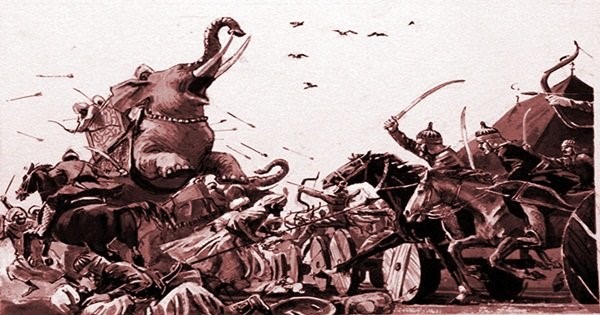
The rest is all history now. The small Chalukyan army and its troop of war elephants routed the invading force, which had previously defeated Multan’s formidable sultans. The Rajput war elephants were armoured and lined up like mountainside steel. They crushed the morale of Ghori’s seasoned armoured cavalry.

Ghori’s performance in the battle was a colossal failure. He fled the battlefield with a few of his men to save his life.

His pride had been crushed, and he never attempted to conquer Gujarat again. Instead, he turned his attention to the more susceptible Punjab, intending to penetrate north India through the Khyber Pass.

General Kodandera Subayya Thimayya – The Indian Army’s Finest Hero

“A General Thimayya is not born in every generation. The likes of him there will seldom be a soldier. The General is a man’s man, the Army his soul and his soul the Army”

Lieutenant General Premindra Singh Bhagat, VC

Kodava are a unique race of people who live in Kodagu, the smallest district in Karnataka, which the British named as Coorg. This community of warriors lived on the slopes of the Western Ghats of South India from time immemorial. This landowning community known for its martial traditions has a distinct culture that is strikingly different from that of the neighbouring ones.

Kodavas are basically ancestral and nature worshippers. Every Kodava is a member of a patrilineal akka (clan) that has descended from a common ancestor. Karanava, the first ancestor of the clan is revered as a God and Kodavas worship the ancestral spirit, their Guru Karona.

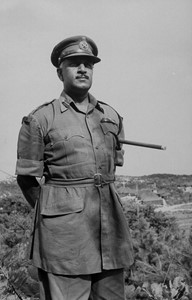
Field Marshal Kodandera “Kipper” Medappa Cariappa OBE of Kodava Clan was the first Commander-in-Chief of the Indian Army.

Kodandera Subayya Thimayya was born in Madikeri, the district town of Kodagu on 31 March 1906, in the same clan as General Cariappa – The Kodandera.

His family was one of the leading coffee planters in the area. Thimayya, born to Subayya and Cheppudi Chittauwa, was the third of six children in his family. All the three boys Ponappa, Thimayya and Somayya of the family rose to become officers in the Indian Army.

His family sent Thimayya, at the age of eight years, to St. Joseph’s College in Coonoor, a convent run by Irish brothers. Later, Thimayya was sent to Bishop Cotton Boys’ School in Bangalore. After completing school, Thimayya went to the Prince of Wales Royal Indian Military College, a necessary stepping stone for a commission in the Indian Army. Following his graduation from RIMC, “Timmy”, as he was affectionately known, was one of only six Indian cadets selected for further training at the Royal Military College, Sandhurst.

After completing his training, he was commissioned into the Indian Army on 4 February 1926 as a Second Lieutenant. Thimayya was subsequently attached to the Highland Light Infantry as was the norm then, prior to a permanent posting with a regiment of the British Indian Army. He was soon posted to the 4th Battalion of the 19th Hyderabad Regiment (now Kumaon Regiment), with date from 28 May 1927. Appointed the regimental adjutant in September 1930, Thimayya honed his soldiering skills on that famous training ground in the Northwest Frontier (present-day Pakistan), battling recalcitrant Pathan tribals.

In January 1935, Thimayya married Nina Cariappa. On 20 March 1936, they had a daughter, Mireille. His wife, Nina Thimayya, was a recipient of the Kaisar-e-Hind medal for her philanthropic contribution during the 1935 Quetta earthquake. The same April, Thimayya was posted as an Adjutant at the University Training Corps in Madras, as a fitting example for young Indian undergraduates interested in joining the Indian Army, of what a good soldier should be.

Second World War

After this tenure, Thimayya was posted to his battalion in Singapore. In early 1941, he was promoted to the acting rank of Major and at his request, was transferred to India in October. Thimayya was posted as the Second-in-Command of a new raising at the Hyderabad Regimental Centre in Agra. He was then detailed to attend the Staff College at Quetta where he and his wife had earlier made a name for themselves by selfless service during the 1935 Quetta earthquake. He then served as GSO2 (Ops) (a Grade II Staff Officer) of the 25th Indian Division, the first Indian officer to get this coveted staff appointment.

His infantry division was conducting jungle warfare training and was preparing to go into Burma to face the Japanese Army during the Second World War, serving in the Second Arakan campaign. In Burma, he was posted to his old regiment as Commanding Officer of 8/19th Hyderabad, which he led with outstanding success in battle. For a short while, the battalion was under the command of the 3rd Commando Brigade, with Brigadier C. R. Hardy at the helm, who during the height of a battle presented a trophy to the battalion. It was a green beret – the command’s headdress – with a little typed message on a card, “We cannot buy anything here but we would like you to accept this as a token of our great admiration for the bravery and achievement of your battalion.” For his outstanding service in battle, he was awarded the much-coveted Distinguished Service Order (D.S.O) and also a Mention-in-Dispatches.

Thimayya represented the country during the surrender of the Japanese in Singapore, followed by the surrender of the Japanese in the Philippines. At the ceremony of the Japanese surrender in Singapore, he signed on behalf of India. He was awarded the ‘Keys to Manila’ when he was sent to the Philippines. His innate talents of professional soldiering and leadership were soon recognized by Field Marshal Sir Claude Auchinleck, the Commander-in-Chief of the Indian Army. He was specially selected to lead the 268th Indian Infantry Brigade as part of the British Commonwealth Occupation Force in Japan after World War II. He got this assignment due to his outstanding battle experience as a Brigadier and being the only Indian to command a battle formation in the field. As a matter of policy, the British avoided giving an operational command to Indians. Thimayya was the only exception.

As an independent brigade, the 268th had done excellent work in the Burma Campaign and was detailed as part of BRINDIV led by Maj Gen D. T. “Punch” Cowan. Brigadier Thimayya proved to be an outstanding commander and his diplomatic skills emerged as he had to deal with General Douglas MacArthur, the Supreme Allied Commander of the Southwest Pacific Theatre, the other Allies and the vanquished Japanese. Thimayya’s personality, charm of manners and unassailable reputation, impressed the Japanese of the calibre of Indian commanders. Thimayya was called on to defuse the sit-down strike by the 2nd Battalion, 5th Royal Gurkha Rifles at the palace of the Emperor of Japan in Tokyo when the battalion refused to obey its British officers.

As Indian Independence approached, he was recalled to India by then Commander-in-chief of British India, Field Marshal Sir Claude Auchinleck. He returned to India in 1947, during the Partition, as a member of the committee to agree to the allotment of weapons, equipment and regiments that were to remain in India or to be allotted to Pakistan. Soon after the commission was completed, he was promoted to the acting rank of Major-General in September 1947 and was then assigned the command of the 4th Infantry Division and also to take over the Punjab Boundary Force, dealing with the exodus and intake of refugees fleeing to their respective countries.

In 1948, he was one of the active officers in the actions against the forces of Pakistan in the conflict over Kashmir. His next appointment was the command of the 19th Infantry Division in Jammu & Kashmir where he succeeded in driving the raiders and the Pakistan Army out of the Kashmir Valley. Personally leading the attack in the forward-most tank, the surprise attack on Zoji La on 1 November 1948 by a brigade with Stuart Light Tanks of the 7th Light Cavalry, succeeded in driving out the entrenched raiders and Pakistan Army regulars and the eventual capture of Dras, Kargil and Leh.

Thereafter, Thimayya served as the Commandant of the Indian Military Academy, Dehra Dun. On 1 January 1950, he was promoted to substantive major-general from his rank of brigadier. On 1 October 1951, Thimayya was appointed Quartermaster General.

The experience gained by him in Japan stood him in good stead when he was specially selected by the United Nations to head the Neutral Nations Repatriation Commission in Korea. It was a very sensitive and delicate task dealing with unruly Chinese and Korean prisoners. Here again, through sheer charisma, impartiality, firmness and diplomacy, he completed this task to the satisfaction of the world body.

He returned to India and was promoted to General Officer Commanding-in-Chief, Southern Command, with the rank of Lieutenant-General, in January 1953. In 1954, he was awarded the Padma Bhushan for Civil Service. He took over the reins of the Indian Army on 7 May 1957.

General Kodandera Subayya Thimayya assumed charge of the Indian Army, as the 6th Chief of the Army Staff, on 7 May 1957. He briefly resigned his post in 1959 over a dispute with V. K. Krishna Menon, the then Minister of Defense (India). Prime Minister Jawaharlal Lal Nehru refused to accept his resignation and persuaded him into withdrawing it. However, little action was taken on Thimayya’s recommendations and he continued as the Army Chief till his retirement on 7 May 1961, completing 35 years of distinguished military service. Hence retired from the army in 1961, almost 15 months before the Chinese invasion of India in November 1962.

After retirement from the Indian Army, the United Nations sought his services yet once again when he was appointed as the Commander of UN Forces in Cyprus (UNFICYP) in July 1964. He died during his tenure at UNFICYP in December 1965 and his mortal remains were flown to Bangalore for the last rites.
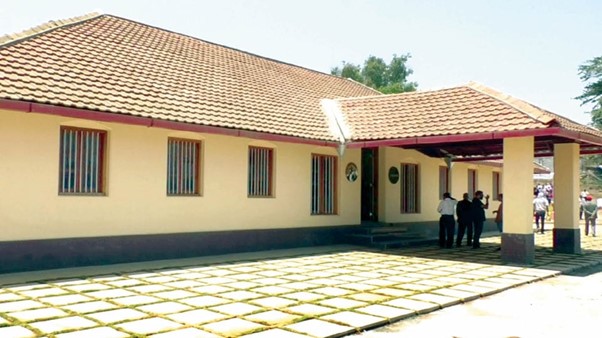
General Thimayya’s house “Sunny Side” in Madikeri has been converted into a museum and a war memorial. It was inaugurated in February 2021 in the presence of the President and Chief of Defense Staff.

Maharaja Digvijaysinhji Ranjitsinhji Jadeja (Jam Sahab) – Indian Schindler

German’s combined armed forces of Heer (Army), Luftwaffe (Air Force) and Kriegsmarine (Navy) during World War II, was termed as Wehrmacht, which meant “Defence Power” in German.

Wehrmacht committed systematic war crimes included massacres, mass rape, looting, forced labour, murder of three million Soviet Prisoners of War and extermination of about 6 million Jews.

Wehrmacht attacked Poland on September 1, 1939.

A group of about 600 Polish children and 40 women were rescued and put onboard small ships, which travelled from port to port – in Scotland, Ireland, Africa, but were barred from entering. Finally, they arrived in Bombay.

Maharaja Digvijaysinhji Ranjitsinhji Jadeja, King of Navanagar in Gujarat, was an Indian representative on the Imperial War cabinet in London, chaired by Winston Churchill.

Hearing of the children’s plight from the Polish Prime Minister-in-exile – General Wladyslaw Sikorski, he flew immediately to Bombay. He first went to the ships, saw the dreadful condition of the kids, spoke to the captains and went to meet the Governor. British Governor also refused entry, saying he did not have permission from the home office in London, and that they came from enemy territory.

Maharaja went back to the ships and asked the captains to move to Navanagar’s Rosi Port. He took them all off and put them in tented accommodation.

Viceregal Office in Delhi objected to him taking in foreigners. Maharaja said they were part of his family, and even produced an adoption certificate.

Later a camp was set up in Balachadi, about 15 miles away from the Capital City of Jamnagar. The camp existed till early 1946; subsequently, the children were transferred to Valivade camp in Kolhapur. To educate the children, a school was also set up.

While the Red Cross, the Polish Army in exile and the colonial administration jointly helped set up the camps, it was the Maharaja who played the crucial role in the children’s welfare.

Maharaja told the children, “You may not have your parents, but I am your father now.” The children, in turn, called him “our Bapu” (“father”).

United Nations-assisted repatriation began in 1946.

Poland has shown its gratitude to the Maharaja in various forms. Warsaw has a “Good Maharaja Square” named after the Maharaja. Poland also named a school after the Maharaja, who was passionate about children’s education. The Maharajah was awarded the President’s Medal, Poland’s highest honour.

Rani Abbakka Chowta – The Fearless Warrior Queen of Tulu Nadu

“She could ride a horse, fight with a sword and was a seasoned diplomat. She also had bloody battles with the Portuguese and was the last person to use agnivanas or arrows tipped with fire”

Chowtas were the Jain Kings who had migrated from Gujarat in 12th Century to Tulu Nadu, a province consisting of present-day Dakshina Kannada district of Karnataka, portions of Udupi and Kasaragod district in Kerala. Ullal was the capital of the Chowta king Thirumala Raya III.

As the Chowtas were a matrilineal dynasty, the king’s heir was his young niece, Abbakka. The fiercely independent princess had been trained in sword fighting, archery, cavalry, military strategy, diplomacy and all other subjects of statecraft from a very young age.

Before his death, Thirumala Raya III had arranged a strategic marriage alliance for Abbakka with Lakshmappa Bangaraja, the ruler of Mangalore. As the ruler of Ullal, Rani Abbakka continued to live in her own home even after marriage and the couple’s three children stayed with her. However, the marriage broke down when Bangaraja compromised with the Portuguese.

Since the 7th century, maritime trade (in spices, textiles, war horses, etc.) had flourished between the communities of India’s western coast and the Arabian Peninsula. With an eye on this lucrative trade, several European powers had been trying to discover the sea route to India. The Portuguese finally became the first Europeans to find a sea route to India when Vasco Da Gama reached Calicut in 1498 after a long voyage.

Five years later, the Portuguese built their first fort at Cochin. This was followed by the establishment of a ring of forts in the Indian Ocean region – in India, Muscat, Mozambique, Sri Lanka, Indonesia, even as far as Macau in China. This, along with its superior naval technology, put the control of all the spice routes to India into the hands of the Portuguese within twenty years of Da Gama’s historic voyage. For the whole of the 16th century, Portuguese dominance in the region remains unchallenged by any other European power (the Dutch, the French and the British reached India only at the start of the 17th century).

Trading in the Indian Ocean, which had hitherto been a free trade zone for Indian, Arab, Persian and African ships, now required a paid permit from the Portuguese. The naval superiority of the Portuguese meant that they invariably won against local rulers who rebelled.

In 1526, the Portuguese captured the Mangalore port. Their next target was Ullal, a thriving port town that lay nestled between the verdant peaks of the Western Ghats and the cerulean blue waters of the Arabian Sea.

With an eye on Ullal’s trade (that had flourished under the Queen’s able leadership), the Portuguese had been trying to exact tributes and taxes from Rani Abbakka. Incensed and exasperated at the unfair demands, she refused to accede to the Portuguese demands. Her ships continued to trade with the Arabs despite attacks by the Portuguese. From Mogaveeras and Billava archers to Mappilah oars men, people of all castes and religions found a place in her army and navy.

Infuriated by her effrontery, the Portuguese began attacking Ullal repeatedly. The first battle took place in the year 1556, with the Portuguese fleet being commanded by Admiral Don Alvaro de Silveira, and ended in an uneasy truce.

Two years later, the Portuguese attacked with a larger force and were able to ransack the settlement at Ullal to some extent. However, Rani Abbakka’s masterful battle tactics and diplomatic strategy (she collaborated with Arab Moors and Zamorin of Kozhikode) pushed them back once again.

During the next battle, the Portuguese army under General Joao Peixoto attacked Ullal and managed to capture the royal palace. However, Rani Abbakka escaped before they could capture her.

Along with 200 loyal soldiers, she raided the Portuguese in the dead of night and killed the general along with 70 of his soldiers. Frightened by the ferocity of the attack, the remaining Portuguese troops fled to their ships

By this time, the Portuguese had become alarmed about Rani Abbakka’s growing reputation inspiring other rulers. When repeated frontal attacks didn’t work, they resorted to treachery. A series of edicts were passed to make any alliance with the defiant queen illegal. Her husband, Bangaraja of Mangalore, was also warned against sending any aid to Ullal under the threat of burning his capital.

Yet, Rani Abbakka continued to dismiss these rulings with contempt and scorn. The stunned Portuguese now decided to send Anthony D’ Noronha (the Portuguese Viceroy of Goa) to attack Ullal. In 1581, 3,000 Portuguese troops supported by an armada of battleships attacked Ullal in a surprise pre-dawn attack.

Rani Abbakka was returning from a visit to her family temple and was caught off guard but she immediately mounted her horse and rode into the battle, leading her troops in a fierce counter-offensive.

Her piercing battle cry – “Save the motherland. Fight them on land and the sea. Fight them on the streets and the beaches. Push them back to the waters”, echoed through winds as she and her soldiers fired flaming arrows at the Portuguese ships.

While many of the ships in the Portuguese armada burnt that night, Rani Abbakka was wounded in the crossfire and was captured by the enemy with the help of a few bribed chieftains. Rebellious till the very end, the fearless queen breathed her last in captivity. However, her legacy lived on through her equally fierce and brave daughters who continued to defend Tulu Nadu from the Portuguese.

She was an immensely popular queen and even today she is a part of folklore. Her story has been retold generation to generation through folk songs, folk theatres and local ritual dances.

Sardar Hari Singh Nalwa – Fiercest Warrior in Sikh History

Sardar Hari Singh Nalwa - Fiercest Warrior in Sikh History

Hari Singh Nalwa was born into the Uppal family to Sardar Gurdial Singh and Dharam Kaur in Gujranwala, Punjab’s Majha District. His father, Sardar Gurdial Singh, followed the profession of his father and took part in various campaigns of Sukarchakia Sardars – Charat Singh and Mahan Singh – in the capacity of Deradar. He expired in 1798 when Hari Singh was only seven years old. He was thus looked after by his maternal uncle.

Hari Singh joined Maharaja Ranjit Singh’s Khalsa army at the tender age of 13 and at the age of 18, led the first victory. He subsequently became the right hand of Maharaja Ranjit Singh.

An incident took place in Hari Sing’s early days of service in the Khalsa army. During a hunting expedition, Hari Singh was attacked by a tiger. The attack was so subtle and unexpected that he did not have enough time to pull out his sword. Young Hari Singh faced the crucial situation with such boldness that he managed to catch hold of the jaw of the beast with his hands, forcefully pushing it away before killing it with his sword. Noted historian Baron Charles Hugel says, he was called Nalwa for ‘having cloven the head of a tiger who had already seized him as its pray’.

Hari Singh fought 22 battles in his carrier, without losing one. He was the longest serving Great Commander in Chief of Maharaja Ranjit Singh’s army.

Between 1804 and 1837, Sardar Hari Singh Nalwa fought many battles against the Afghans, quickly earning himself the reputation of the only man who struck terror in their hearts.

Legend has it that Afghan mothers used to quieten their children by taking Nalwa’s name and for young Afghans, his name was a terror spoken in hush hush. Even American Generals used to tell Nalwa’s story to motivate their troops when US-Afghan war was in its thick.

Hari Singh Nalwa is almost entirely credited for the Sikh empire’s expansion beyond the Indus Valley and up to the Khyber Pass.

Sardar Hari Singh Nalwa is considered to be one of the few men to have ever totally dominated the Khyber Pass, starting with the battle of Kasur in 1807 and ending with the capture of Jamrud in 1836. Despite the fact that the odds were stacked against him in each fight, it was his wit and superior knowledge of fighting tactics that won him his victories.

Hari Singh Nalwa’s first significant military campaign was that of Kasur in 1807. Along with his fellow commanders, Hari Singh Nalwa marched on to Kasur to subjugate its Afghani owner Kutab-ud-din Khan. Sikhs laid siege for three months after which Kutab-ud-din Khan surrendered. Hari Singh Nalwa was the first to march inside the city gate of Kasur with his division.

Battle of Mankera in 1822, battle of Nowshera in 1823, battle of Sirikot in 1824, battle of Saidu in 1827 and the seizure of Peshawar in 1834 are major battles fought and won by Nalwa.

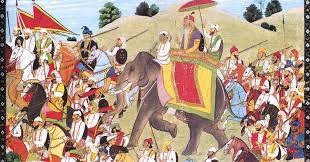
In 1836, soon after Dussehra, Hari Singh Nalwa conquered Jamrud, a fort at the mouth of the Khyber Pass. This victory meant that the Sikhs could launch offensive against Kabul anytime. Dost Mohammed Khan of Kabul was alarmed with this victory. But the marriage of Nau Nihal Singh, the Maharaja’s grandson in 1837, changed the equation and troops were withdrawn from all over Punjab to put up a show of strength for the British Commander-in-chief who was invited to the wedding.

Dost Mohammed Khan was also invited to the great celebration, but he did not go. Instead, he chose to take this opportunity to seize Jamrud. Hari Singh Nalwa anticipated this and did not go to Amritsar, stationing himself in Peshawar.

Dost Mohammed ordered his army to march towards Jamrud together with his five sons and his chief advisors, with orders not to engage with the Sikhs. Instead, it was more of a show of strength to try and wrest the forts of Shabqadar, Jamrud and Peshawar. Hari Singh was also told not to engage with the Afghans till reinforcements arrived from Lahore.

Hari Singh’s lieutenant, Mahan Singh, was in the fortress of Jamrud with 600 men and limited supplies. Hari Singh, who was in Peshawar, moved to rescue his men who were surrounded from every side by the Afghan forces, without water in the small fortress. Though the Sikhs were totally outnumbered, the sudden arrival of Hari Singh Nalwa put the Afghans in total panic. In the melee, Hari Singh Nalwa was accidentally grievously wounded.

Before he died, he told his lieutenant not to let the news of his death out till the arrival of reinforcements, which is what he did. While the Afghans knew that Hari Singh had been wounded, they waited for over a week doing nothing, till the news of his death was confirmed. By this time, the Lahore troops had arrived and merely witnessed the Afghans fleeing back to Kabul.

Hari Singh Nalwa had not only defended Jamrud and Peshawar, but had prevented the Afghans from ravaging the entire north-west frontier.

Azad

“India had a good number of freedom fighters who fought to secure the country’s independence from British rule, and among the well-known personalities was Chandra Shekhar Azad. Today, July 23, marks the birth anniversary of the fearless man who chose to make the supreme sacrifice by taking his own life to escape imprisonment and torture at the hands of the British”. PM Modi

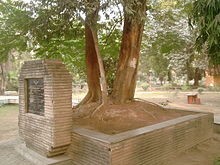
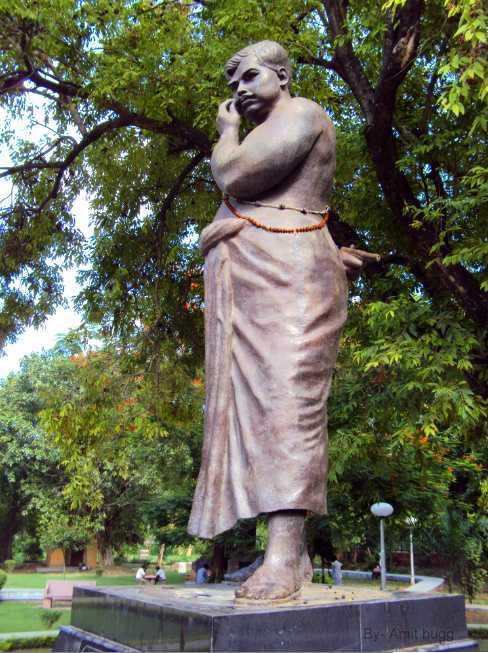
Born in Allahabad, I have a special place in my heart for Chandra Sekhar Azad. Just opposite my school, St. Joseph’s High School, is Company Bagh, in the outskirts of which he shot himself to death in February 1931, after he was ambushed. It was said that he was waiting for a secret and a crucial meeting with a colleague Virbhadra Tiwari, who turned traitor and informant.

I was born in December 1950, 29 years after he died. I moved to Delhi in 1984.

Whenever we had relatives visiting us, I would religiously take them to the place where he died and relate the whole incidence. I left Allahabad in 1984, till then the whole place was intact in its original form. I would show them the tree where he shot himself. I would take them around the moat which surrounded the area and explain how the whole battalion of armed force silently and secretly using the moat approached Azad, shooting bullets from their rifles, nonstop. Even then they could not kill him. Hundreds of bullets were fired. Azad retaliated with his gun and shot himself, when he was left with only one bullet. Even after Azad killed himself, the battalion was scared to go near him. They did so surrounding him with rifles loaded and with bayonets pointed at him.

I would describe the whole event as though I had witnessed it, with tears in my eyes and goosebumps.

Born as, Chandrasekhar Tiwari in the village Bhabhra, Madhya Pradesh on July 23, 1906, he went to Kashi Vidyapeeth, Banaras to study Sanskrit.
When Gandhiji launched the Non-Cooperation Movement in December 1921, Chandra Shekhar Azad, who was then 15 and still studying, joined the movement.

Chandra Shekhar Azad was arrested for joining Gandhiji’s movement and as punishment was lashed with a whip. It is said that when he was brought before the magistrate, he gave his name as Azad (“The Free”), his father’s name as Swatantrata (“Independence”), and place of residence as Jail.
After Gandhiji suspended the non-cooperation movement in 1922, Chandra Shekhar Azad joined the Hindustan Republican Association (HRA), a revolutionary organisation formed by Ram Prasad Bismil, Sachindra Nath Sanyal and others.

Chandra Shekhar Azad took charge of HRA after Ram Prasad Bismil, Ashfaqulla Khan, Rajendra Lahiri and Thankur Roshan Singh were sentenced to death in the Kakori train robbery case.

As a freedom fighter, Azad was also involved in the Kakori Train Robbery of 1925, in the attempt to blow up the Viceroy of India’s train in 1926.

After the capture of the main leaders of the HRA, Chandra Shekhar Azad and Bhagat Singh secretly reorganised the HRA as the HSRA (Hindustan Socialist Republic Army) in September 1928.

When Lala Lajpat Rai died in 1928 due to the grievous injuries he suffered at the hands of superintendent of police James A Scott, members of the HSRA vowed to avenge his death. But due to a case of mistaken identity, Assistant Superintendent of Police John P Saunders was killed.

I would like my children and grandchildren to bow their heads with respect whenever they hear the name of this great Hero of India, who at the raw stage of 15 jumped into the freedom struggle. Heroes like him were instrumental in getting India’s independence.

Rani Karnavati – The Forgotten Warrior Queen

In India, the valour of many kings and queens have been buried under the sand of time, often deliberately. One such queen was Rani Karnavati from the Garhwal Kingdom, which like Mewar could never be captured by the Mughals. The queen was known for her ruthless bravery which earned her the title of ‘Nak-Kati-Rani’ which means the queen who cuts the nose.

In Himalayas, in 16th Century there used to be a Garhwal Kingdom, presently known as Tehri Garhwal of Indian State Uttarakhand. Mahipati Shah a Rajput, was the Ruler of the Kingdom. The capital was Srinagar, which got shifted from earlier capital Dewalgarh. King Mahipati Shah had ascended the throne in 1622.

The king was known for his fierce bravery and his stiff opposition to any invasion. When Shah Jahan was crowned on 14th February 1628 at Agra, rulers all across the Northern India went to pay a personal visit to the new emperor. The king of Garhwal decided to avoid this ceremony which enraged the new emperor. The emperor was also told about the Gold Mines in Srinagar region, which increased the determination of the new emperor to plan an invasion. The King Mahipati Shah suffered fatal injuries during the battle of Kumaon and his short reign ended in 1631.

His son Prithvipati Shah was coronated at the age of seven. Mahipati Shah’s wife, Rani Karnavati ruled the kingdom on behalf of her very young son. She ruled till the time her grown up son Prithvipati came to the throne and started ruling.

When the Delhi emperor came to know about Mahipati Shah’s demise, he ordered an attack on the Kingdom of Srinagar in 1640. His general Najabat Khan, along with thirty thousand men marched towards the Garhwal Kingdom.

The queen allowed them to enter the kingdom but held them at today’s Lakshman Jhoola. The men could neither move forward nor retreat. Unknown to the terrain and food supplies running low, the men were losing morale. Najabat Khan sensing defeat sent a peace message to the queen which was rejected.

The desperation in the Mughal army ran high and queen toyed with them like a seasoned predator. She finally came down heavily on them and captured them only to release them after cutting off their noses.

Rani Karnavati resorted to psychological warfare by sending a message to the Mughal court that if she could chop off their noses, she could also chop off their heads. The sultan was embarrassed and enraged. He ordered another attack under Areej Khan who met the same embarrassment under the hands of the brave Rani and her generals.

The drubbing scars of the lost battle were left on the face of the Mughal Empire. Later the Garhwal army regained their lost land and the anecdotage of Rani Karnavati’s victory became popular in the whole region and created a rich history of Garhwal.

The drubbing scars of the lost battle were left on the face of the Mughal Empire forever.

Walk and Talk with My Friends Elephants

Elephant1

Aristotle said of elephants: “The beast which passeth all others in wit and mind“.

I know elephants since I was an infant. My maternal grandparent used to live in a quaint town called Moulmien, in Burma. During summer holidays me and my siblings would to go there with our mother, spending close to couple of months every visit.

My grandfather had a large timber factory there. Since cranes were not known in those days, elephants were used for movement of large trunks. My grandfather also owned an elephant. I always believed that he could talk to elephants. He handled his elephant very aptly and treated him like a son.

My grandfather taught me about elephants, their intelligence, emotions and how to communicate with them.

Last year I shifted to Dehradun, capital of Uttarakhand, a state in India. Before that, I spent two years in Parmarth Ashram in Haridwar. From Haridwar, I frequently visited Rishikesh. All these three towns are surrounded by Rajaji Forest. Rajaji Forest is extensive and is connected to Himalayas, Holy River Ganga and many small rivulets.

Rajaji Forest is a habitat of elephants and they are the original owners of the area, including Dehradun, Haridwar and Rishikesh, which has now been encroached by humans. Present population of elephants in Rajaji Forest is about 1800.

Remembering and not forgetting what my grandfather taught me about elephants, I thought of getting in touch with them. It was not easy. Elephants do not like us human beings and prefer to keep away. They do not trust humans. Whenever the elephants and humans cross in forests, there is always a clash.

It took lot of time getting friendly with a herd of elephants. Once I did, we started meeting often. This herd was quite large with one head, five males, six females and four calves.

Most of the talking was done by the herd head. When I asked him about them in general, he said that, we are capable of a range of emotions, including joy, playfulness, grief and mourning. In addition, we are able to learn new facts and behaviours, mimic sounds that we hear, self-medicate, play with a sense of humour, perform artistic activities, use tools and display compassion and self-awareness. We have 400 words in our elephant vocabulary.

He said that, we are amongst the most intelligent creatures on earth. In fact, our intelligence rivals that of human beings. Our weakness is that we are not born with survival instincts and need to learn these during infancy and adolescence.

Our capacity for memory and emotions is remarkable. This is also the area responsible for emotional flashbacks and is the reason that elephants experience Post-Traumatic Stress Disorder.

He explained that we mourn our dead. We give our deceased burial ceremony. The burial ceremony is marked by deep rumblings while the dead body is touched and caressed by the herd member’s trunks. Those who are already reduced to a skeleton are still paid respect by passing herds.

Self awareness is yet another indication of the vast capacity for thinking and intellect that exists in us, said the elephant. We can, in fact, recognise ourselves in a mirror, something that is extremely rare in the animal kingdom.

I read about elephants getting killed by fast moving trains at night, when they are crossing railway tracks. Though there is a defined speed limit for train drivers when they pass Rajaji Forest during night or in early morning, they seldom adhere to it.

Poachers kill elephants for tusks. We humans have encroached on to their habitat and kill them by accident or on purpose.

Elephant2

We fail to realize that there is a purpose for which Nature created elephants.

Elephants are among the most intelligent of the creatures with which we share the planet. Elephants with complex consciousnesses are capable of strong emotions. They are also keystone species, playing an important role in maintaining the biodiversity of the ecosystems in which they live.

During the dry season, elephants use their tusks to dig for water. This not only allows the elephants to survive in dry environments and when droughts strike, but also provides water to other animals, that share harsh habitats.

When forest elephants eat, they create gaps in the vegetation. These gaps allow new plants to grow and create pathways for other smaller animals to use.

They are also one of the major ways in which trees disperse their seeds; some species rely entirely upon elephants for seed dispersal. Wherever they live, elephants leave dung that is full of seeds from the many plants they eat. When this dung is deposited the seeds are sown and grow into new grasses, bushes and trees, boosting the health of the ecosystem.

In the Jungle Book movie, when elephants are passing, Baloo says to Mowgli “Bow down and show respect to the elephants. They are the one who have created forests. It is because of them the animals live, mountains and rivers are there”.

In the areas where the elephants live, humans need to learn to avoid conflict with them. Obstructions should not be created on the paths in which they move.

After all, to survive, we need them more than they need us. We exist if elephants exist.

Elephant3