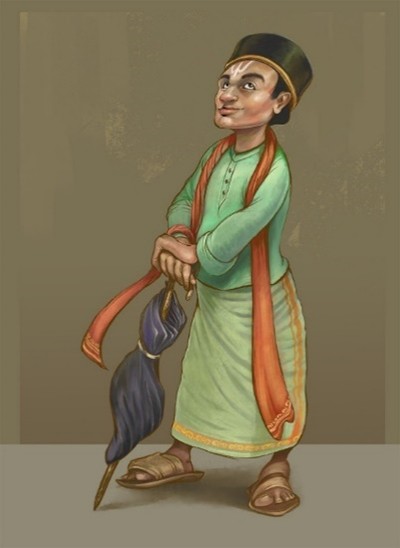
The Chettiars are a prominent, historically wealthy Tamil mercantile community, celebrated as pioneering international bankers and traders across Southeast Asia, renowned for their philanthropy, distinct architectural heritage and spicy, aromatic cuisine. The term “Chettiar” is derived from the Sanskrit word “Shrestha” meaning wealthy.
The story of Chettiars begins in the eastern coast of India in Kaveri Poompattinam, the bustling port city of Chola Kingdom. Historically, they were involved in the trade of salt, textiles, gems, and precious stones and developed as bankers during the Chola era.
The Chola dynasty was a dominant Tamil power (9th–13th centuries CE) based in the Kaveri valley, known for building a vast maritime empire, and exercising naval supremacy across Southeast Asia. Under leaders like Rajaraja I and Rajendra I, they created a powerful and organized state.
Cholas used their navy to control trade routes in the Indian Ocean. Known for constructing the Brihadisvara Temple (Thanjavur) and creating exquisite bronze sculptures of Nataraja, they developed a highly organized administrative system with self-governing local village assemblies (Ur and Sabha).
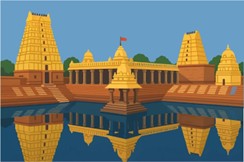
They expanded from the Kaveri delta to control all of South India, Sri Lanka, and parts of Southeast Asia.
Chettiars were the primary financiers and merchant guilds for the Chola Empire, managing international trade connections across Southeast Asia. Trade and commerce flourished under the Chola emperors, with kings often accommodating these guilds because of the benefits derived from them.
Prominent guilds like the Nanadeshis, Manigramam, and Ayyavolu were active during the Chola period.
The Chettiars were key to the maritime prosperity of the Chola Empire, often building massive, affluent houses in their homeland while acting as powerful financial architects of the empire’s overseas commercial dominance.
In the fifth century they abandoned Kaveri Poompattinam, because of a tsunami and moved inwards. Haunted by that collective memory of water’s rage, the community chose to settle in an arid, infertile region – a decision that shaped their future. Like the Marwadis of Rajasthan, another community born of dry land, the Chettiars turned outward, venturing across seas in search of fortune, only to return and invest in their homeland.
Over the centuries, their voyages took them to Malaysia, Singapore, Burma, Vietnam, and even parts of Europe, often alongside the Cholas and later under the British. They became trusted financiers and intermediaries for empires, building wealth and influence through networks that spanned continents.
Known for their prowess in money lending, they established themselves as bankers and financiers, not only within South India but also spreading to Southeast Asia (Burma, Malaysia, Singapore, Vietnam and Sri Lanka) during the colonial era. They are described as a prosperous, community-oriented group that was disciplined in financial practices, with strong ties to temples as central community institutions.
But the Second World War disrupted those global connections, forcing many to return home. They continued to thrive into the 19th and 20th centuries before shifting focus during the economic downturns
Today, the Chettiars are spread across 90 villages, numbering over a lakh people. While outsiders often associate them with the grandeur of their mansions and the fiery flavours of Chettinad cuisine, their legacy goes much further. They were patrons of music and dance, nurtured Tamil literature, invested in education, and even helped shape the early Tamil film industry. Theirs is a community whose influence reached far beyond the dining table, leaving behind a cultural imprint as rich as their cuisine.
Chettiars and Burma

The Chettiars provided the essential capital that transformed the Irrawaddy Delta from jungle into productive paddy fields. By 1930, they had established 1,650 offices across Burma. They were the primary source of agricultural credit, with an estimated 750 million rupees invested in the country by 1930. Their loans often accounted for nearly 80% of all agricultural lending in Lower Burma. They functioned as “proto-financial institutions,” using internal trust and sophisticated accounting (like the Hundi system) to provide lower interest rates than indigenous lenders.
When rice prices collapsed during the 1930s Depression, many Burmese cultivators defaulted on their loans. Under the British legal system, Chettiars were forced to foreclose on mortgages. By the late 1930s, they had unwillingly become the owners of about one-quarter to one-third of Burma’s best cultivable land. This massive transfer of land to “foreign” moneylenders fuelled intense anti-Indian sentiment and led to the Chettiars being demonised as scapegoats for the failures of the colonial economy.
The Japanese invasion in 1942 and the use of worthless “banana money” to repay debts severely depleted Chettiar capital. Following Burma’s independence in 1948, the Land Nationalization Act effectively stripped the community of their remaining holdings without adequate compensation. The wealth remitted from Burma built the famous Chettinad mansions in Tamil Nadu, which often feature Burma teak and other imported materials.
Chettiars and Malaysia
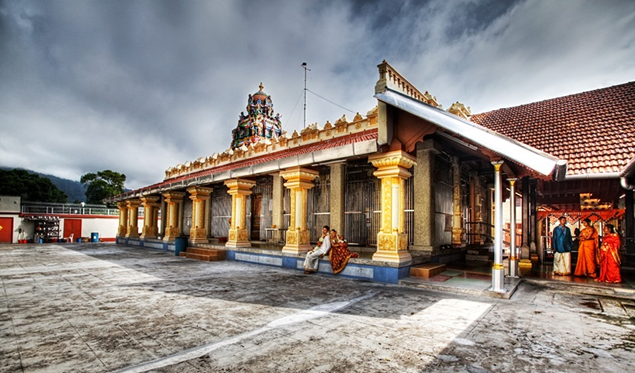
The Chettiars were pivotal in shaping Malaysia’s colonial economic infrastructure from the 19th century onwards by providing crucial financial services, banking, and credit to Malay farmers, Chinese merchants, and rubber planters when formal British banking was inaccessible. Their lending, spanning rubber plantations to tin mining, essentially acted as the “bankers before there were banks” in Malaya.
Chettiars were a dominant, trusted source of capital and credit for smallholders, miners, and merchants, especially in rubber and tin, facilitating the growth of small businesses and land ownership.
Under British rule, they were encouraged, with their operations often serving as intermediaries, linking colonial commercial banks to local traders and ensuring the financial stability of economic ventures. They operated through a structured, often male-only, agency system (Kittangi), prioritizing close-knit networks to facilitate business and money-lending.
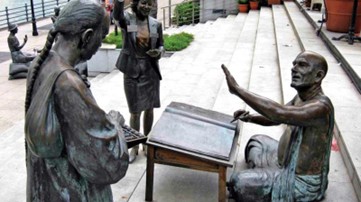
While focusing on business, they also made significant cultural contributions, particularly to Hindu life in Malaysia, including building temples and contributing to religious activities.
Over time, particularly after Malaysian independence, their role as main moneylenders declined. They shifted towards other professional sectors while remaining a respected part of the Indian community’s legacy in the region.
There is also a smaller, distinct community known as the Melaka Chettiars (or Malaysian Chettis), who are distinct from the Nattukottai Chettiars. They are descendants of early South Indian traders who intermarried with local populations, forming a unique syncretic culture.
Chettiars and Vietnam
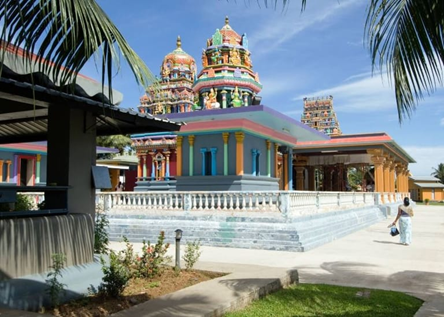
The Chettiars established a strong financial presence in Vietnam (French Cochin-China) starting in the 1870s. Operating from Saigon’s “Tamil Quarter” (Ohier Street), they acted as bankers, financiers, and property owners, facilitating rice and rubber trade before returning to India after 1963.
They operated as moneylenders and brokers, often providing credit to rice farmers and rubber planters. They concentrated in Saigon (Ho Chi Minh City), with businesses extending to villages along the Mekong delta.
The Chettiars built Hindu temples of Lord Murugan for their community. The famous Sri Mariamman Temple in Ho Chi Minh City stands as a major remnant of this, along with others.
They maintained a close-knit network, often bringing women to settle in later years (1930s onwards).
Chettiars and Singapore
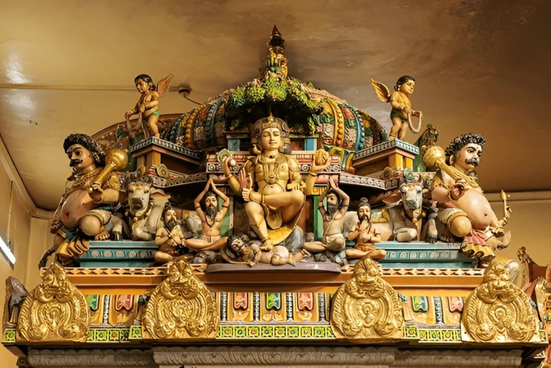
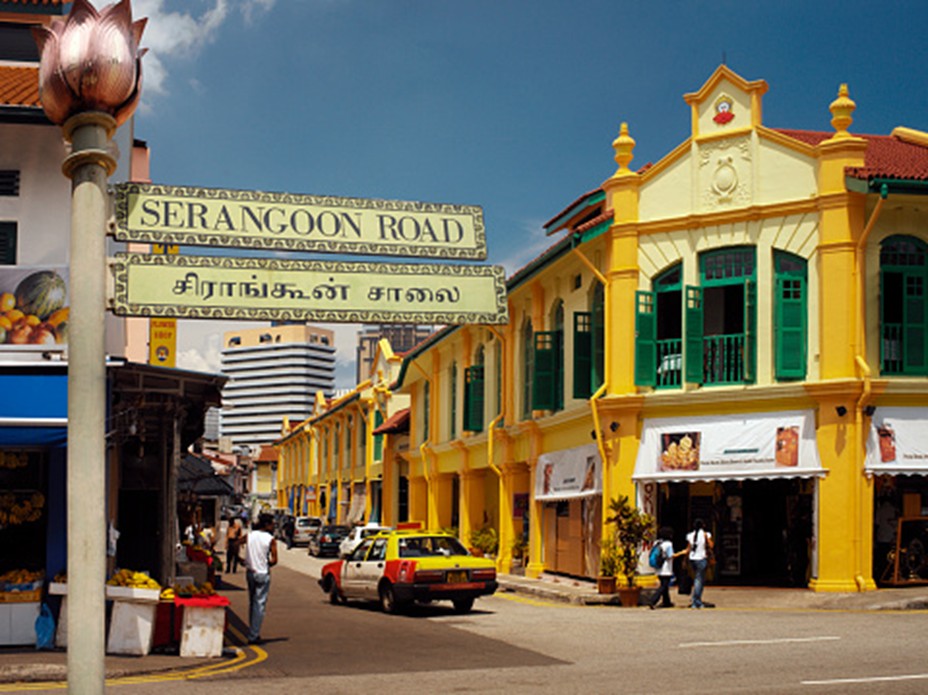
The first wave of Chettiar immigrants are believed to have arrived in Singapore in the 1820s. They established their businesses in the Singapore River area (notably along Chulia Street and Market Street) in close proximity to the trading houses and government offices. Their clients included small businesses, labourers, hawkers and plantation owners.
Borrowers who loaned small amounts from the Chettiars had to sign a promissory note. Those who took loans for larger amounts had to provide some form of collateral, such as jewellery or a title deed. Interest was charged on the amount borrowed and the rate of interest was listed in the promissory note.
The Chettiars generally conducted their businesses in Kittangis (which means “warehouse” in Tamil), which were usually shop houses. The Chettiars would set up their offices on the ground floor of a Kittangi.
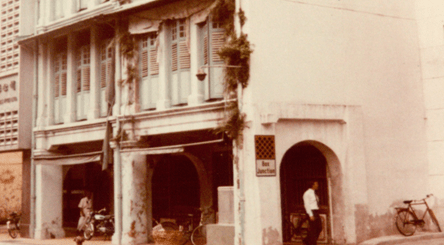
As Chettiars usually operated individually, each had his own safe and wooden cupboards for conducting business. A Chettiar moneylender usually sat on the floor and worked from a small wooden desk. There were also no partitions to separate the various Chettiar moneylenders as they had their own designated spots for doing business.
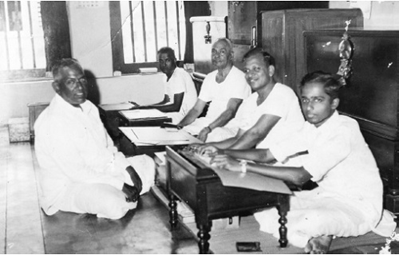
While some of the Chettiars ran their own moneylending businesses, others were agents who worked as employees for the owners of moneylending firms. They were paid a salary and bonuses, depending on the profits made by the business. Each agent represented his employer and was only contracted for a specific period of time. Before an agent’s contract was up, the employer would send a newly appointed agent to understudy him. Once his contract had ended, an agent would seek employment with other firms.
A Chettiar’s financial training would usually start in his childhood, where he would learn the theory of banking and accounting from family members. Boys as young as nine years old were rigorously trained in mental arithmetic and even taught to do mental calculations in fractions. They would go on to serve their apprenticeship at various Chettiar firms once they reached their teens.
The Chettiars worked and lived in the Kittangi. While the ground floor of the Kittangi served as their offices, the upper floors were used as residences. A caretaker took care of the Kittangi while cooks provided the meals.
Most of the Chettiars who came to Singapore did not bring their whole family with them. While some came alone, others brought their sons along with them. The boys were to become apprentices of the business. It was only in the 1950s that Chettiar women began arriving in Singapore in large numbers.
The Chettiar community in Singapore established the Sri Thendayuthapani Temple (also known as Chettiars’ Temple) at Tank Road in 1859 to provide a place of worship for the Hindu deity, Lord Muruga.
The Chettiar moneylenders were considered a major player in the banking and finance sectors of early Singapore. In the 19th and early 20th centuries, there were more Chettiar moneylending firms than there were banks. They financed trade, tin mining, and rubber plantations, providing crucial capital for Singapore’s early growth. They provided loans to traders and industries, especially when British banks were hesitant to invest, functioning as private bankers and moneylenders. They introduced a sophisticated indigenous banking system, including specialized promissory notes known as Hundi.
The moneylending business started to decline in the 1930s as a result of the Great Depression, stricter legislative control over moneylending activities and the participation of other groups, such as the Sikhs, in moneylending. The Japanese Occupation (1942–1945) also brought about a steep fall in Chettiar moneylending activities due to the instability of the Japanese currency and rampant inflation.
After the war, the decline of the Chettiar moneylending business continued. This was due to a combination of various factors, including stricter government policies concerning moneylending, immigration and employment practices. The growth of the industrial and banking sectors also contributed to the decline of moneylending. In particular, stricter policies in post-war Singapore towards moneylending activities were believed to have dealt a severe blow to the industry. In the 1950s, for instance, a new ordinance was enacted that required every moneylender to be registered and licensed. They were also to be subjected to official supervision. Revisions to the Moneylenders’ Act in the 1970s enforced more stringent rules on the moneylending business. These regulations probably forced many Chettiar moneylending firms out of business.
By 1981, there were only seven registered Chettiar moneylending firms still operating in Singapore. Many of the surviving Chettiar moneylenders conducted their business activities at 238, Serangoon Road or near the Chettiars’ Temple at Tank Road.
Sri Lankan Chetties
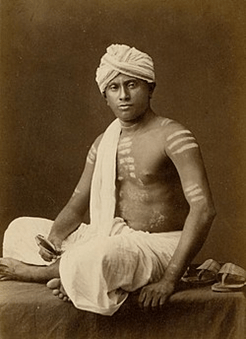
Chettiars settled mostly in Western Sri Lanka, especially in the ports of Colombo from the 16th century to mid-17th century, during the rule of the Portuguese and Dutch.
The Chetties of Western Sri Lanka converted to various forms of Christianity during the colonial era: Roman Catholicism under Portuguese rule, as well as to Anglicanism and Reformed Christianity under British rule and Dutch rule, respectively.
Marriages between Sinhalese and Chetties were very common and therefore many were Sinhalised. The Chetties of Northern Sri Lanka especially in Jaffna were mainly absorbed by the Vellalar caste, although, some still remain separate. A high number of Chetties still live in Nallur, which is known for the inhabitation of high castes, whereas even a road is commemorated for them. Representatives of the Colombo Chetty Association stressed out their distinctiveness, appealing for forming a separate ethnic group.
The Chetties were notably also listed as a separate ethnic group from 1814 to 1817.
Historically an elite and generally wealthy ethnicity, they no longer strictly marry amongst themselves. In addition, migration to Australia, England, United States of America and Canada has tended to dilute their numbers.
The Nattukottai Chettiars were dominant financiers and bankers in Sri Lanka (Ceylon) from the 19th to early 20th century. They played a pivotal role in funding the plantation economy and acting as intermediaries between British banks and local traders. They also played a crucial role in aiding the Sri Lankan economy during the 1930s economic recession.
They were considered essential bankers in the island, especially before British banking expanded, providing capital for plantations and importing/exporting. They operated in Colombo and held significant sway over the financial sector until the early 20th century.
Chettiars used Kittangis that acted as banks, homes, and administrative centres.
The Nattukottai Chettiars are distinct from the “Colombo Chetties,” who are a separate ethnic group in Sri Lanka that migrated earlier, though both have roots in Tamil merchant communities.
They established themselves securely in Ceylon (Sri Lanka) to conduct business, similar to their, expansion into Southeast Asia.
The Chettiars played a transformative role in Sri Lanka’s financial history before their role began to diminish with the rise of modern commercial banking institutions.
Chettiars Religious Paintings
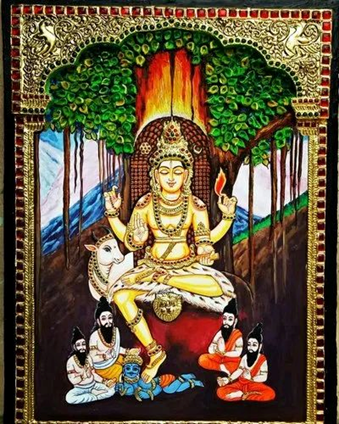
Chettiar religious paintings and artistic traditions are deeply rooted in the cultural identity of the Nattukottai Chettiars. Their art is characterized by opulent, devotional, and highly detailed religious themes, frequently showcasing a blending of traditional Tamil styles with imported materials and influences.
Following the decline of the Maratha rule in Thanjavur, the Chettiar community continued to patronize Thanjavur (Tanjore) artists. They commissioned luxurious paintings featuring 22-carat gold foil, precious stones, and embossed detailing.
As staunch Shaivites, Chettiars favoured religious paintings of Lord Shiva (including his various forms like Nataraja) and Lord Murugan. They also commissioned extensive series of paintings illustrating the lives of the 63 Nayanmars (Saivaite saints) and the 64 miracles of Shiva (Thiruvilaiyadal Puranam), found in places like the Koviloor monastery.
Because the Chettiars were a merchant class, depictions of Lakshmi, the goddess of wealth and prosperity, are very common, particularly in the form of Gajalakshmi. These are frequently featured on the ornate teakwood doors of their mansions.
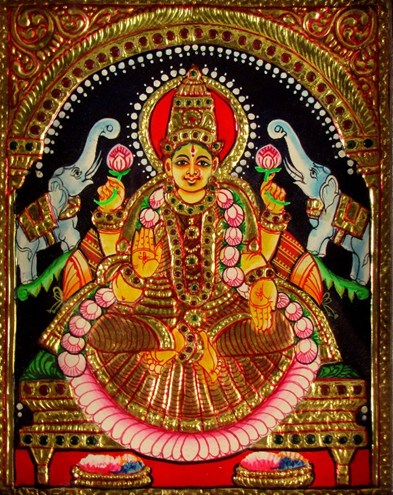
Chettiar homes and temples often feature murals or painted panels. These buildings integrated Indian art with foreign materials imported by the Chettiars from their travels (e.g., Belgian lamps, Italian marble).
In addition to paintings, Chettiar mansions often featured stained glass panels, particularly in the temples (such as the Sri Thendayuthapani Temple in Singapore), which depicted Hindu deities like Shiva and Ganesha.
A unique, heavy teakwood frame used for Tanjore paintings is known as the “Chettinad frame,” a signature, ornate element in their home decor.
These paintings served not only as religious devotion but also as a demonstration of their prosperity, artistic taste, and commitment to maintaining the “spirit of Bhakti” (devotion).
Chettinad Cuisine
The Nattukottai Chettiars or Chettiars traded across the country and the world. Their travels not only influenced their ways of life but also their cuisine in more ways than one.
Chettinad cuisine is a fiery, aromatic, and complex culinary tradition from the Chettiar community of Tamil Nadu. It is defined by freshly ground, spice-heavy masalas, sun-dried meats and vegetables, and generous use of coconut, peppercorns, and tamarind. Signature dishes include Chettinad Chicken Pepper Masala, Kuzhi Paniyaram, and aromatic rice dishes.
The use local Goondu Milagai (round chillies) for mild heat, black pepper, fennel, fenugreek, cumin, and star anise.
Due to their mercantile travel history, Chettiars perfected the art of sun-drying meats and vegetables, which are later cooked in heavy spices and tangy tamarind sauces.
Dishes are known for being bold, spicy, and tangy, yet balanced, often served on banana leaves for added aroma.
Chettinad food reflects a sophisticated blend of local Tamil traditions with international influences, particularly from their time in Burma (now Myanmar) and Southeast Asia.

Chettiar Architecture
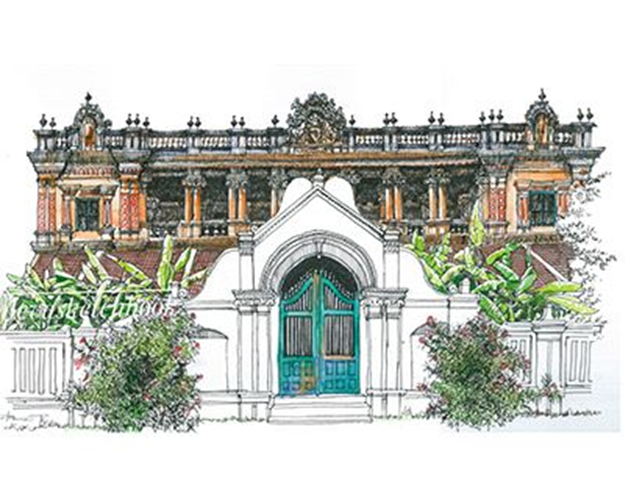
Chettiar architecture, found in Tamil Nadu’s Chettinad region, refers to opulent mansions built by the Nattukottai Chettiar community between 1850 and 1940. These homes blend traditional Tamil layouts—centered on courtyards and raised verandas—with lavish, imported materials like Italian marble, Burmese teak, and Belgian glass, creating a unique, luxurious, and eco-friendly design.
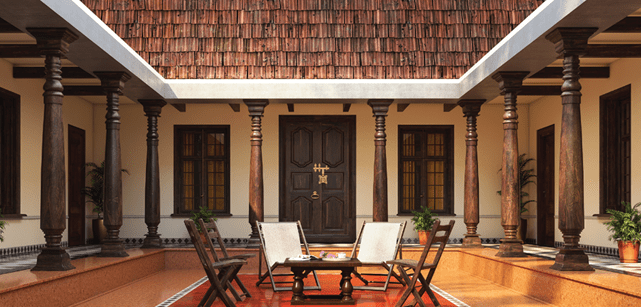
Built along a longitudinal axis, these houses often span from one street to another, featuring a large, ornate entrance, followed by an open-air courtyard (Mutram) surrounded by verandas with pillared corridors, and leading to smaller courtyards and private family chambers, often featuring teakwood interiors.
Known for extreme durability and splendour, they utilize thick brick walls, lime plaster mixed with egg white and polished to a mirror finish, intricate teak wood carvings, Athangudi tiles (handcrafted in the region), and large, ornate iron pillars.
The architecture is perfectly suited to the hot, arid climate. The thick walls and centrally located courtyards ensure the interiors remain cool. The roofs are designed to capture rainwater for wells and common ponds.
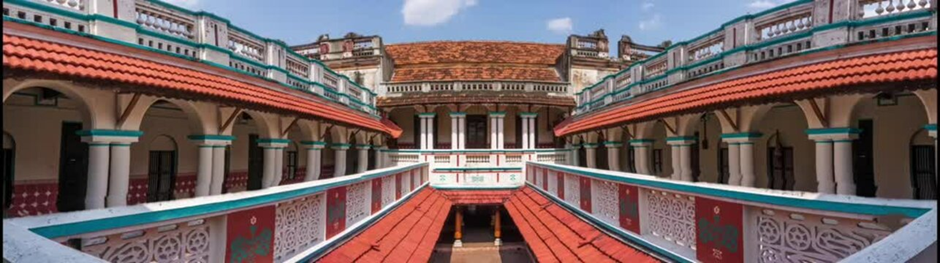
The mansions reflect the trading community’s journeys, blending European architectural styles—like Gothic facades, Victorian chandeliers, and stained glass windows—with local Hindu cultural motifs, such as stucco figures of deities on the facade.
These sprawling, two-storey homes served as both family residences and commercial spaces, showcasing the community’s immense wealth and international trade connections.
Many of these mansions can be found in Karaikudi and surrounding areas, with many now being converted into heritage hotels.
 Ashok Chowdhary